 By How to Live in JAPAN 編集部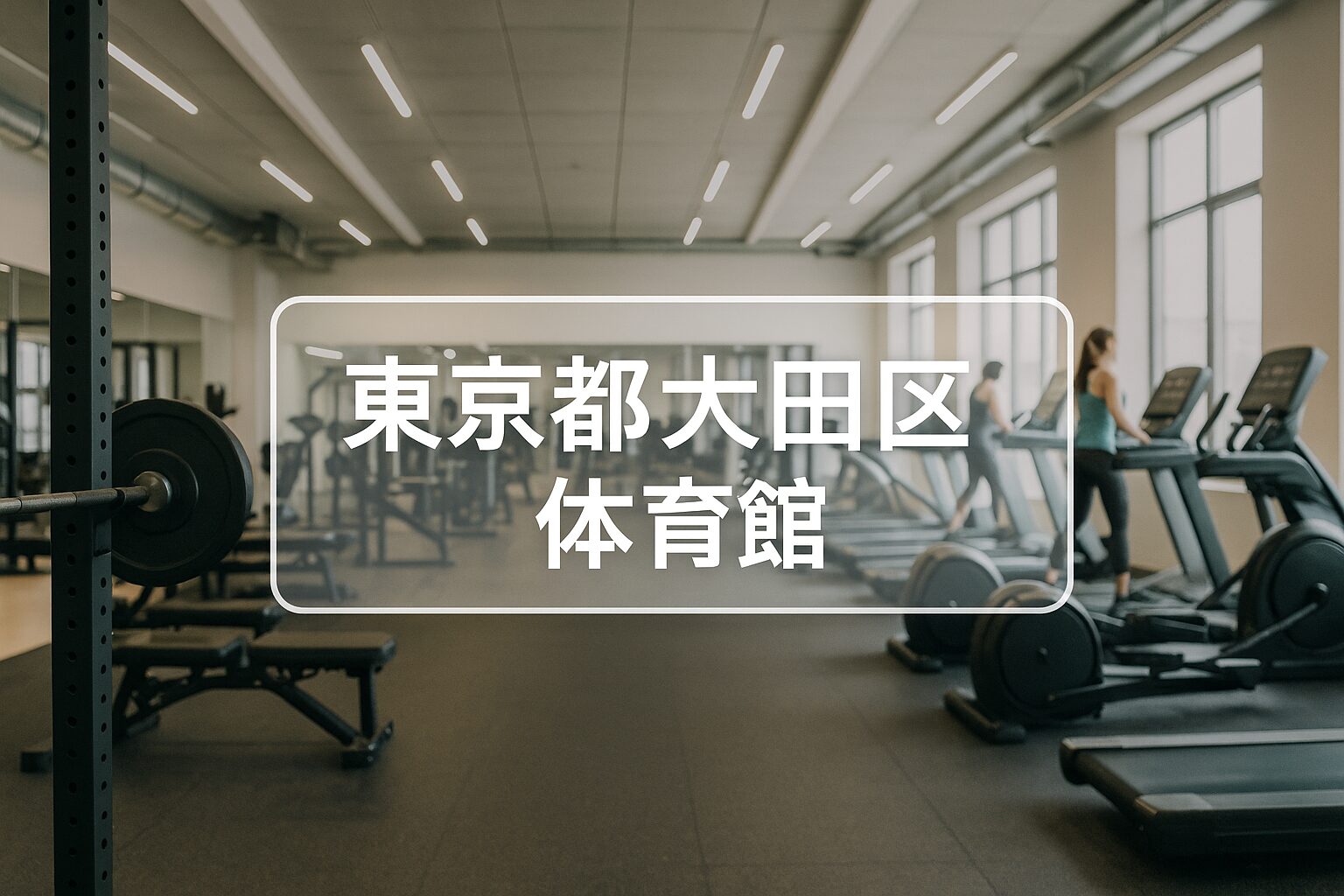
I. Start Your Healthy Life in Ota City, Japan!
The Charm of Ota City and the Benefits of Sports
Ota City, Tokyo, boasts Haneda Airport, excellent access to the city center, and a charming blend of rich nature and community-rooted living. For foreign residents staying in Japan for several months to several years, it’s crucial to not only focus on work but also to integrate into the local community and lead a fulfilling daily life. In this context, sports transcend mere physical activity, serving as a wonderful means to maintain health, relieve stress, and deepen interactions with local people.
While life in Japan can often become work-centric, having opportunities for recreation and physical activity significantly enhances one’s quality of life. Public sports facilities offer diverse amenities at affordable prices, making them an ideal choice for incorporating active elements into your daily life in Japan. By utilizing these facilities, you can discover new hobbies, continue existing sports, or even find opportunities to join local sports communities.
What You’ll Find in This Guide
This guide introduces five carefully selected gymnasiums and sports facilities in Ota City, Tokyo, that are accessible to residents and particularly easy for foreign residents to use. For each facility, we provide detailed basic information such as location, access methods, official website URL, operating hours, and usage fees. Furthermore, we explain how to make reservations, as well as Japanese-specific manners and precautions for using sports facilities. We hope this information will contribute to your rich and fulfilling life in Ota City.
II. Top 5 Public Sports Facilities in Ota City
Ota City’s public sports facilities offer a wide range of sports activities at affordable prices, making them ideal places for foreign residents to maintain an active lifestyle. Here are five selected facilities that cater to various needs, including gym training, swimming, basketball, table tennis, badminton, and volleyball.
Overview of Selected Ota City Public Sports Facilities
| Facility Name | Main Activities | Approximate Individual Usage Fee | Nearest Station (Major) | Official Website URL |
|---|---|---|---|---|
| Ota City General Gymnasium | Basketball, Volleyball, Badminton, Table Tennis, Judo, Archery, etc. | Primarily for group use (individual use requires confirmation) | Keikyu Kamata Station | https://www.ota.esforta.jp/ |
| Omori Sports Center | Gym, Basketball, Volleyball, Badminton, Table Tennis, Judo, Kendo, etc. | Gym: 330 yen/session | Heiwajima Station | http://www.omori-sc.jp |
| Higashi Chofu Park Pool | Swimming (indoor 25m pool, outdoor water slide) | High school age and above: 480 yen/2 hours | Ontakesan Station | https://www.east-chofu.jp |
| Haginaka Park Pool | Swimming (indoor/outdoor pools, water slides) | High school age and above: 360 yen – 480 yen/session | Otorii Station | https://haginakapool-kyoei.jp/ |
| Den-en-chofu Seseragi-kan Training Room | Gym | 330 yen/session | Den-en-chofu Station (estimated) | https://www.city.ota.tokyo.jp/shisetsu/seseragi/training-room.html |
Ota City General Gymnasium
Ota City General Gymnasium is a large-scale indoor sports facility representing Ota City. Its main arena boasts an area of 1,824m², accommodating 3 volleyball courts, 2 basketball courts, or 10 badminton courts, and features over 4,000 spectator seats. The sub-arena (646m²) can be used for 1 volleyball or basketball court, 4 badminton courts, or 2 judo areas. Additionally, there are two 120m² gym rooms and an archery range, supporting a wide range of indoor sports.
- Location and Access While the exact address is best confirmed on the official website, it is one of Ota City’s major public facilities.
- Official Website https://www.ota.esforta.jp/
- Operating Hours and Fees The facility is generally available from 9:00 AM to 9:00 PM.Usage fees vary significantly depending on the facility (main arena, sub-arena, etc.), time slot (morning, afternoon, evening, full day), and user category (within/outside the ward, weekday/weekend/holiday). For example, for non-ward residents using the entire main arena on a weekday morning, the estimated fee is 19,200 yen. For the sub-arena on a weekday morning, it’s 7,600 yen. These fees are primarily for group facility rentals and differ from individual drop-in use.
- Reservation Method and Information for Foreigners Reservations for facilities such as the main arena and sub-arena begin at 9:00 AM by phone or at the General Gymnasium counter. Sports use by ward residents can be booked up to 4 months in advance, while non-ward residents or non-sports use can be booked up to 1 month in advance. If there are multiple requests for the same slot, a lottery will be held. After reservation, the full usage fee must be paid by the specified deadline.This reservation system is primarily for booking entire courts or arenas for groups, which can be complex for individuals seeking casual use. Especially for team sports like basketball, volleyball, or badminton, booking an entire court might not be practical for individuals. In such cases, joining local sports circles or clubs that manage facility reservations might lead to smoother access.
Omori Sports Center
Omori Sports Center is a comprehensive facility catering to a wide range of indoor sports. Its 1,620m² arena can be used for various ball games and martial arts, including 1 handball court, 2 basketball courts, 2 volleyball courts, 8 badminton courts, 27 table tennis tables, 3 judo areas, and 6 kendo areas. It also has 376 spectator seats. In addition, there’s a versatile health and physical education room, a small hall, meeting rooms, and a spacious 375m² training room.The training room is well-equipped with aerobic machines, strength training machines, and free weights, suitable for both beginners and experienced users.
- Location and Access The address is 2-2-5 Omorihoncho, Ota-ku, Tokyo. The nearest public transport is Heiwajima Station on the Keikyu Main Line, about a 6-minute walk. Alternatively, from JR Omori Station East Exit, take a Keikyu Bus (bound for Omori Higashi 5-chome, Morigasaki via Omori Kaigan, or Haneda Airport) and get off at “Omori Jinja” bus stop, then walk about 1 minute.
- Official Website http://www.omori-sc.jp
- Operating Hours and Fees The facility is generally open from 9:00 AM to 10:00 PM.The individual usage fee for the training room is a very affordable 330 yen per session. It is available for users aged 15 and above. A booklet of 11 tickets is also sold for 3,300 yen and can be purchased at the automatic ticket vending machine.This pricing is significantly cheaper compared to private fitness gyms in Tokyo, offering a great advantage for long-term foreign residents to exercise regularly without worrying about costs. Usage fees for the arena and gym rooms, similar to Ota City General Gymnasium, are primarily based on group rental, varying by time slot and user category.
- Reservation Method and Information for Foreigners No prior reservation is required for individual use of the training room. You can simply purchase a ticket at the automatic vending machine upon arrival.This is very convenient for foreign residents who want to use the gym casually. For group rentals of the arena and gym rooms, a prior reservation and lottery system may apply, similar to Ota City General Gymnasium. If you wish to use these larger spaces, it is recommended to inquire directly with the facility or check their official website for detailed reservation procedures.
Higashi Chofu Park Pool
Higashi Chofu Park Pool is a public swimming facility located in Minamiyukigaya, Ota City. It features an indoor 25-meter pool and an outdoor water slide. The former outdoor 50-meter pool was removed due to river improvement work, and the restoration of park facilities thereafter is currently undecided. The facility is designed with accessibility in mind, including wheelchair-accessible parking, step-free entrances, automatic doors, and AEDs.
- Location and Access The address is 5-13-1 Minamiyukigaya, Ota-ku, Tokyo.It is approximately an 8-minute walk from Ontakesan Station on the Tokyu Ikegami Line.
- Official Website https://www.east-chofu.jp
- Operating Hours and Fees Operating hours are from 9:30 AM to 9:00 PM, with last admission at 8:30 PM and exit from the water by 8:45 PM.Closed on Tuesdays and the first and third Tuesdays of every month, as well as during the New Year holidays (December 28 to January 6). Fees vary between the heated season (September to June) and the summer season. During the heated season, the fee for high school students and above is 480 yen for up to 2 hours, and for junior high school students and below, it’s 200 yen for up to 2 hours. Overtime fees are also set per 30 minutes. A booklet of 11 tickets is available for 4,800 yen for high school students and above, and 2,000 yen for junior high school students and below.Discounts are also available for Ota City residents aged 65 and over, and for those with disability certificates.
- Reservation Method and Information for Foreigners For individual use, no specific reservation method is mentioned. This suggests that, typically, public pools allow individual users to visit directly without prior reservation.Regarding multilingual support, there is no clear mention in the provided information. Therefore, having a translation app ready or learning simple Japanese phrases would be helpful when visiting.
Haginaka Park Pool
Haginaka Park Pool is popular with users year-round, featuring a variety of indoor and outdoor pool facilities. Indoors, there’s a 25m pool, a flowing pool, a toddler pool, and a 56m water slide. Outdoors, there’s a 50m official pool, a toddler pool, a “nagisa” (beach-like) pool, and a 63m water slide. There are also slides for infants, making it suitable for all ages.The facility is designed with accessibility in mind, including wheelchair-accessible parking, step-free entrances, automatic doors, and AEDs.
- Location and Access The address is 3-26-46 Haginaka, Ota-ku, Tokyo. It is approximately a 6-minute walk from Otorii Station on the Keikyu Haneda Airport Line. Alternatively, from JR Kamata Station East Exit, take a bus bound for Haneda Airport and get off at “Haginaka Koen-mae” bus stop, then walk about 1 minute.
- Official Website https://haginakapool-kyoei.jp/
- Operating Hours and Fees Operating hours are from 9:30 AM until closing. During the summer season (early July to early September), it operates in time slots such as 9:30 AM to 12:30 PM, 1:15 PM to 4:15 PM, and 5:00 PM to 8:00 PM, with a 2-hour limit per session.Fees vary between summer and heated seasons. In summer, it’s 360 yen per session for high school students and above, and 100 yen for ages 1 to junior high school. During the heated season (months other than summer, indoor only), it’s 480 yen per session for high school students and above, and 200 yen for children. Closed on the first and third Wednesdays of every month, but operates without holidays during the summer season.
- Reservation Method and Information for Foreigners For individual use, there is no specific mention of a reservation method. This implies that, similar to other public pools, you can visit directly without prior reservation. Notably, Haginaka Park Pool explicitly states that it supports English.This is very reassuring information for foreign residents who are not confident in Japanese, significantly lowering the barrier to use. You can expect guidance and support in English, allowing you to consider using the facility with peace of mind.
Den-en-chofu Seseragi-kan Training Room
The training room at Den-en-chofu Seseragi-kan is a dedicated gym space spanning 180 square meters. It is equipped with essential training equipment such as strength training machines, aerobic machines, and dumbbells.This facility is suitable for general fitness and health maintenance rather than specialized sports.
- Location and Access The address is 1-53-12 Denenchofu, Ota-ku, Tokyo.The nearest station is not explicitly mentioned in the provided information, but given its location in Denenchofu, access from Tokyu Toyoko Line or Meguro Line is likely. It is recommended to check the official website for detailed access information.
- Official Website https://www.city.ota.tokyo.jp/shisetsu/seseragi/training-room.html
- Operating Hours and Fees The facility is available daily from 9:00 AM to 10:00 PM.The usage fee is 330 yen per session, and no prior reservation is required. A booklet of 11 tickets can also be purchased for 3,300 yen, valid for two years. A significant convenience is that these tickets can be used at other public training rooms in Ota City (such as Ota Kumin Plaza, Life Community Nishimagome, and Omori Sports Center).This allows users to flexibly utilize multiple public gyms within the ward based on their residence or daily convenience. Please note that from April 1, 2026, the fee will change to 400 yen per session, and the ticket booklet to 4,000 yen.
- Reservation Method and Information for Foreigners Individual use of the training room is available to anyone aged 15 and above without reservation.This is a very user-friendly system for foreign residents who want to drop in and exercise at their convenience. Regarding multilingual support, specific information for this facility is not explicitly stated, but Ota City’s website itself may offer “Language” or “ことば” options.
III. Japanese Sports Facility Usage Manners and Precautions
To comfortably use public sports facilities in Japan, it is crucial to understand and respect local manners and rules. These rules are based on Japanese cultural values such as facility cleanliness, user safety, and consideration for other users.
Quick Guide to Japanese Public Sports Facility Manners
| Item | Manner/Rule | Reason/Note |
|---|---|---|
| Indoor Shoes | Wear dedicated indoor shoes, separate from outdoor shoes. | To prevent floor dirt, for facility protection. Sandals are not allowed. |
| Post-Use Cleaning | After using machines or equipment, wipe them with provided towels or disinfectant. | For the next user’s comfort and hygiene. |
| Sweat Management | Wipe off sweat with a towel during exercise to prevent it from dripping on the floor. | To prevent slipperiness and unhygienic conditions. |
| Baggage Management | Store personal belongings in lockers; do not leave them unattended in the facility. | For safety and to avoid obstructing passage. |
| Trash Disposal | As a rule, take out any trash generated within the facility. | Due to limited public trash cans, for environmental cleanliness. |
| Drinking/Smoking | Strictly prohibited within the facility. Use while intoxicated is also not allowed. | For safety and consideration for other users. |
| Noise | Refrain from loud conversations or phone calls; use the facility quietly. | To avoid disturbing other users’ concentration or relaxation. |
| Tattoos | Generally prohibited from exposure in pools. Cover completely with a rash guard, etc. | To respect Japanese cultural customs. |
| Age Restrictions | Some facilities like gyms may have age restrictions (e.g., 15 years and older). | For safety management. |
| Machine Hogging | Do not monopolize machines for long periods; use efficiently and share. | To improve usage efficiency during crowded times. |
| Returning Weights | Return used weights and machine settings to their original positions. | For the next user’s smooth start. |
| Showers (Pool) | Always shower thoroughly before entering the pool. | For water quality and hygiene. Remove cosmetics, etc. |
| Swimming Cap | Wearing a swimming cap is often mandatory in pools. | For hygiene and to prevent hair from falling out. |
Common Manners
Japanese sports facilities have several common rules to ensure a comfortable experience for all users. Firstly, in most indoor sports facilities, changing into indoor shoes is strictly required.This is a crucial practice to prevent outdoor dirt from being brought into the facility and to protect the flooring. Footwear unsuitable for exercise, such as sandals, is often not permitted.
Also, cleaning up and tidying after use is a basic manner. After using training machines or equipment, you are expected to wipe off sweat with provided towels or disinfectant spray.This is a consideration for the next user to find the facility clean and reflects the high hygiene awareness in Japanese public facilities. If you sweat during exercise, it’s important to bring a towel and be careful not to let sweat drip onto the floor.
Managing personal belongings is also important. All personal items, including valuables, should be stored in lockers and not left unattended in the facility.This is not only for theft prevention but also to ensure safe passage for other users.
In Japan, public trash cans are scarce, so it is generally good manners to take your trash home.This is due to a cultural background where individuals are responsible for their own waste and environmental cleanliness.
Drinking alcohol and smoking are strictly prohibited within sports facilities.Using the facility while intoxicated is also not allowed. Furthermore, to avoid disturbing other users, it is requested to refrain from loud conversations and phone calls. Maintaining a quiet environment where people can concentrate on their exercise is highly valued in Japanese sports facilities.
Finally, facilities and equipment should be used with care to prevent damage or defacement. In the event of accidental damage, it is required to promptly report it to the facility staff.
Precautions for Pool Use
When using pools, there are specific rules regarding hygiene and safety. Most importantly, you must shower thoroughly before entering the pool.This is essential for maintaining water quality and ensuring the hygiene of other users. Sunscreen, hair products, and cosmetics must be completely washed off before entering the pool.
Regarding attire, appropriate swimwear is mandatory. T-shirts or everyday clothes are not allowed for swimming.Also, in most public pools, wearing a swimming cap is compulsory.
A particular point of caution for foreign residents is the policy on tattoos. In Japan, many public pools strictly prohibit the display of tattoos, largely due to a cultural association with anti-social elements.While many facilities allow entry if tattoos are completely covered with a rash guard or tape, you may be denied entry if they are exposed. Although some private facilities permit tattoos, this custom remains strong in public facilities, so it is wise to understand this and either check in advance or be prepared to cover them.
Precautions for Gym Use
When using gym training rooms, there are also specific rules. First, appropriate athletic wear is required. Jeans, skirts, non-stretch cotton slacks, school uniforms, and suits are not suitable for exercise and may result in denial of entry. Moisture-wicking sportswear and flexible bottoms are recommended.
Many public training rooms have age restrictions, typically for users aged 15 and above.
Also, bringing in personal training equipment is often prohibited. This is to maintain safety and fair use within the facility.
As for machine usage etiquette, avoid monopolizing machines. Especially during crowded times, other users may be waiting, so it’s important to train efficiently and promptly yield the machine to the next person. Long conversations while using machines should also be avoided. Always return weights and machine settings to their original positions after use. This allows the next user to start their workout smoothly.
Tips for Reservations and Usage
In Japanese public sports facilities, the difficulty of making reservations varies greatly depending on the type of facility use. For individual use of training rooms and pools, in most cases, no prior reservation is required; you can simply purchase a ticket at the vending machine on the day of use.This is a major advantage, allowing you to exercise casually according to your schedule.
On the other hand, group use (rental) of arenas and gym rooms for sports like basketball or volleyball typically requires a complex reservation system. Often, applications must be made by phone or at the counter several months in advance, and a lottery is held if there are many applicants. For non-ward residents, the reservation start date may be later. It is very difficult for individuals to rent these facilities, so if you want to enjoy team sports, it is more practical to join local sports clubs or circles that manage reservations.
IV. Conclusion: Enjoy a Rich Life in Ota City, Japan
Ota City’s public sports facilities are a valuable resource for foreign residents staying long-term in Japan to lead a healthy life and connect with the local community. Offering diverse sports at affordable prices, these facilities are more than just places for exercise; they provide opportunities to experience the rich life in Japan.
When using Japanese public facilities for the first time, you might feel a little confused. Understanding Japanese-specific manners and rules in advance, such as wearing indoor shoes, cleaning after use, and handling tattoos, will lead to smoother and more comfortable use. Also, grasping the differences in reservation methods for individual and group use, and utilizing translation apps or support from international exchange centers when needed, will be key to overcoming language barriers.
We hope this guide helps you make your life in Ota City more active and fulfilling. Please visit these facilities, get active, meet new people, and build a truly rich life in Japan beyond just work.