 By How to Live in JAPAN 編集部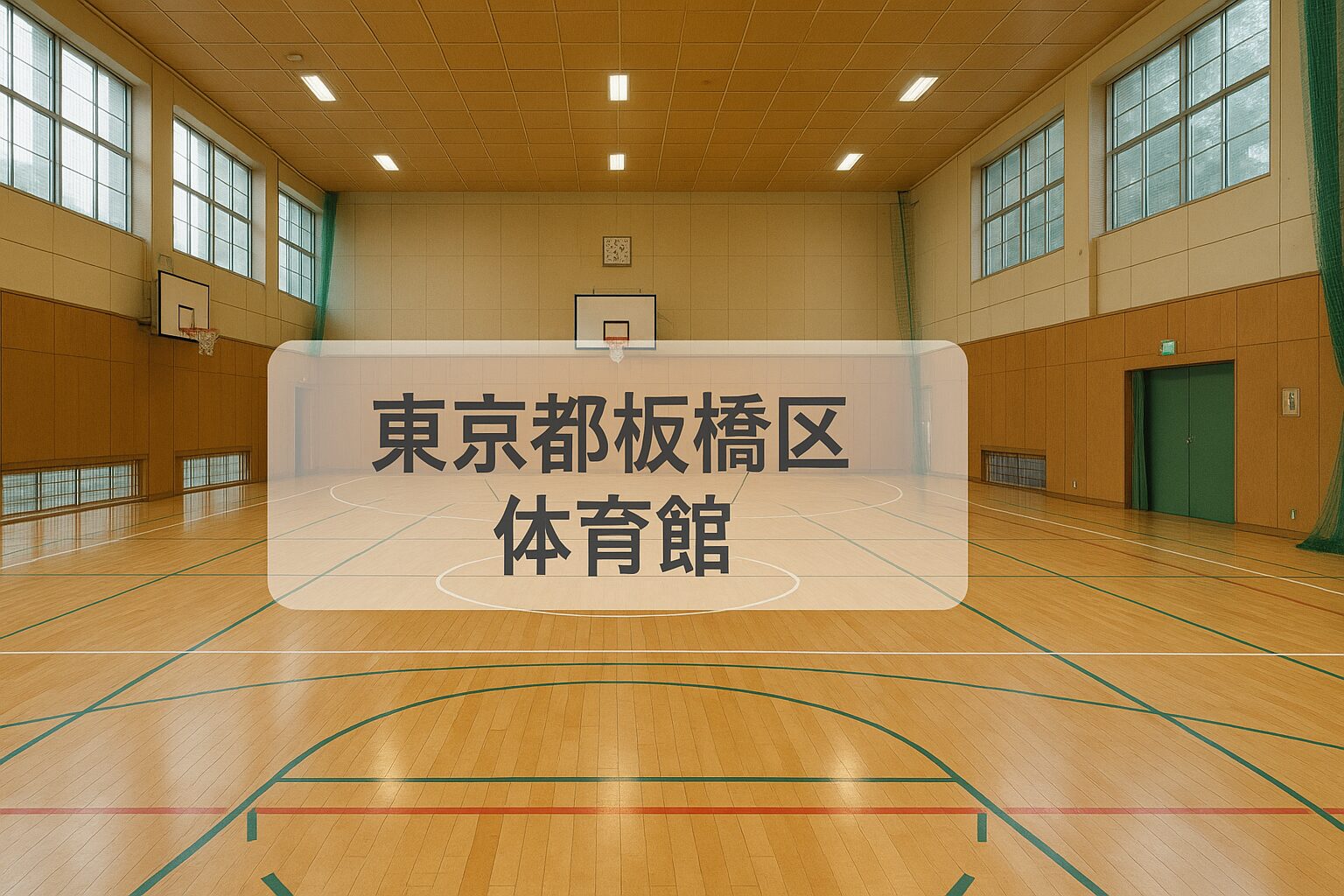
Itabashi City in Tokyo offers numerous ward-run gymnasiums and sports centers that anyone can use at a reasonable cost. Here we introduce five public sports facilities in Itabashi that are especially convenient for foreign residents to use. By hitting the gym, swimming, playing basketball, table tennis, badminton, volleyball, etc., you can refresh yourself outside of work and enjoy a healthier, more balanced life in Japan.
Azusawa Gymnasium (小豆沢体育館)
Located in the northern part of Itabashi, Azusawa Gymnasium is a comprehensive sports center just about a 5-minute walk from Shimura-sakaue Station on the Toei Mita subway line, making it very accessible. The facility houses a 25-meter indoor heated pool, a well-equipped weight training room, a large indoor arena, a martial arts dojo, studios, and meeting rooms. The arena can accommodate multiple sports: for example, it has space for two basketball or volleyball courts, up to six badminton courts, or even as many as 20 table tennis tables at once, allowing for a wide variety of activities. Whether you want to work up a sweat in the gym, swim some laps, or enjoy team sports, this center has you covered.
Hours & Closed Days: Open from 9:00 to 23:00 on weekdays (until 21:00 on weekends and holidays), so you can even drop by after work. The pool is available from 10:00 (from 9:00 during school summer holidays) and closes slightly earlier – until 22:20 on weekdays and 20:20 on weekends/holidays. The facility is closed on the 2nd Monday of each month (or Tuesday if that Monday is a national holiday) and over New Year’s (December 29 – January 4).
Usage Fees: The fees are very affordable and the same for both Itabashi residents and non-residents. As a guideline, adults pay ¥430 per single use of the training room and ¥480 for a 2-hour swim session. Children (up through junior high school age) pay about ¥100–150, and seniors (65+) get half-price discounts (registration with ID required at the front desk). Additionally, 11-use coupon tickets and 1-month / 3-month / 6-month passes are available (valid at all ward sports centers), which can further reduce costs if you plan to train regularly.
How to Use: No reservation is needed for individual use of the gym or pool – just show up, buy a ticket at the reception (or ticket machine, if available), and you can start using the facilities right away. If it’s your first time in the gym, staff can provide a simple orientation to show you how to use the equipment (instructions are mainly in Japanese, but they often demonstrate physically and use a bit of simple English, so you’ll get the idea). If you want to play basketball, badminton, or other sports in the arena, check the general open-use hours when the courts are available for individuals without reservation. During these scheduled open sessions (posted on the center’s calendar and website), you can just drop in and join others for a game of table tennis, badminton, etc. If you have a group and wish to rent a court exclusively, you will need to reserve in advance via Itabashi’s online facility reservation system (Japanese-only) or by inquiring at the gym’s office.
Etiquette & Tips: When using the indoor arena or training room, you must bring indoor athletic shoes to change into (outdoor street shoes are not allowed on the courts; lockers with a refundable ¥100 coin system are available for your shoes and belongings). In the pool area, wearing a swim cap is mandatory, so don’t forget to bring one. If you have tattoos, you are expected to cover them (e.g. with a rashguard or by taping over them) so they aren’t visible to others. Most of the signage in the facility is in Japanese, but many use pictograms and some basic English, so even first-time visitors can navigate without much trouble. The staff may not be fluent in English, but they are friendly and will do their best to assist you. As long as you follow the rules, the local regulars are welcoming – foreign users can feel comfortable enjoying sports here.
Akatsuka Gymnasium (赤塚体育館)
Akatsuka Gymnasium is located in the Akatsuka area of western Itabashi. It’s about a 12-minute walk from Narimasu Station on the Tobu Tojo Line (and about 15 minutes from the Tokyo Metro Chikatetsu Narimasu Station on the Yurakucho/Fukutoshin Line). If you prefer not to walk, you can take a Kokusai Kogyo bus and get off at the Akatsuka Shogakko-mae stop (“Akatsuka Elementary School”), which drops you right nearby. The facility includes an indoor arena, training room, heated swimming pool, and a meeting room, plus an outdoor youth sports ground. The arena is a bit smaller in scale: it fits one basketball court or two volleyball courts, and it’s also used for badminton and table tennis. The atmosphere is homey and community-oriented – local schools and clubs frequently use this gym, giving it a very friendly, neighborhood feel.
Hours & Closed Days: Open 9:00–23:00 on weekdays (9:00–21:00 on Saturdays, Sundays, and national holidays). The pool’s general hours are 10:00–22:20 on weekdays and 10:00–20:20 on weekends/holidays. Note that on Tuesdays and Thursdays the pool is reserved for group use only, so it is closed to the public on those days. The gym is closed on the 3rd Monday of each month (or Tuesday if that Monday is a holiday) and from December 29 to January 4 for the New Year holidays.
Usage Fees: The fee structure is the same as other Itabashi sports centers: for individual use, adults pay ¥430 for the gym and ¥480 for 2 hours of pool access, children about ¥110–150, and seniors (65+) around ¥210–240 (half price). Discount coupon tickets and season passes can be used here as well, making frequent use even more economical.
Foreigner-Friendly Points: The Narimasu area has a relatively high foreign resident population, and you’ll often see users of various nationalities at Akatsuka Gymnasium. The reception desk sometimes has an English information sheet for facility use; if you’re unsure about anything, you can point to the relevant part on the sheet to communicate with staff. While most signs and rules are in Japanese, some of the staff can understand basic English, and the local Japanese users are generally friendly to newcomers. Compared to a large facility like Azusawa, the smaller scale of this gym can feel more comfortable and unintimidating, which can be a plus if you’re a beginner or a bit shy.
Facility Tips: The training room is equipped with cardio machines and weight equipment, and during your first visit, staff can show you how to use the machines if needed. The pool has a shallow section for children, so families often come on weekends. Sports like basketball and badminton are typically played during designated public open-gym times at the arena. Akatsuka Gymnasium also sometimes hosts “Universal Sports” experience events that anyone can join, regardless of age, disability, or nationality – a great opportunity for cultural exchange through sports. Check the center’s bulletin board or the city website for upcoming events, and feel free to participate if you’re interested.
Etiquette & Notes: The gym has fully equipped locker rooms and showers; when it’s crowded, remember to be considerate and share the space. For gym workouts, wear appropriate exercise clothing and indoor shoes. Before entering the pool, be sure to change into swimwear and rinse off in the shower (in Japan, it’s customary to wash off sweat, makeup, sunscreen, etc., before swimming). Since Akatsuka Gymnasium is in a quiet residential area, please keep noise to a minimum when leaving at night so as not to disturb the neighbors.
Uemura Memorial Kaga Sports Center (植村記念加賀スポーツセンター)
This facility is a recently renovated sports center in the Kaga area of Itabashi, reopened in 2021 after major renovations. Formerly known as the “Higashi-Itabashi Gymnasium,” it was renamed in honor of the adventurer Naomi Uemura (植村 直己). It’s conveniently about a 7-minute walk from Itabashi-kuyakusho-mae Station on the Toei Mita Line, and is also accessible via the Kokusai Kogyo bus (get off at Higashi-Itabashi Taiikukan Iriguchi, meaning “East Itabashi Gymnasium Entrance”). Inside, you’ll find a large indoor arena, a training room, a 25m heated pool with five lanes (plus a children’s pool and a jacuzzi), a martial arts dojo, and meeting rooms. One unique feature of this center is its indoor running track (160 meters long) that circles the arena’s spectator area, allowing you to jog even on rainy days – a rarity in Tokyo, and a big draw for foreign residents who enjoy running.
Hours & Closed Days: Open 9:00–23:00 on weekdays, 9:00–21:00 on weekends/holidays. The pool is available 10:00–22:20 on weekdays and 10:00–20:30 on weekends/holidays. (The pool is closed to the public on Tuesdays and Thursdays for group reservations.) Closed on the 3rd Monday of each month (or Tuesday if that’s a holiday) and from December 29 to January 5 for New Year’s.
Usage Fees: Similar to other facilities, adults ¥430 per use (pool ¥480 per 2 hours), children ¥110 (pool ¥150). Common passes and coupon tickets can be used here as well.
Highlights: Thanks to its refurbishment, the Kaga Sports Center is very clean and bright, and many signs include English labels. For example, facility maps and emergency exit signs are posted in English as well as Japanese, which helps foreign users navigate. Staff are also aware that foreign residents use the center, and they seem to have prepared simple English guide materials (you might find an English information leaflet at the front desk). The indoor running track is open for individual use on certain days (e.g. Monday, Wednesday, Friday, and Saturday mornings) and is popular for walking and jogging. You’ll often see some non-Japanese users running on the track too, creating a naturally inclusive and international environment through exercise.
Sports & Events: The center offers open sessions for various sports on different days. For example, every Friday evening there’s usually a general open basketball time when anyone can join a pickup game. Plenty of table tennis tables are available during open-play hours, so even if you go alone, you can likely find a partner to play with. The dojo hosts judo, karate, and other classes; you can watch or even try joining if you’re interested (remember to be barefoot on the tatami mats). Also, attached to the gym is the Uemura Adventure Hall, a small museum about Naomi Uemura’s expeditions. It’s worth a visit when you need a break – a unique chance to learn about an adventurer’s feats as a complement to your workout.
Etiquette & Info: As with other facilities, be sure to bring indoor shoes and a swim cap. If you plan to use the running track, wear appropriate running shoes (and note that the track is only open during specific hours and closed during group reservations). There aren’t any special rules for foreigners; just follow the general etiquette for using public sports facilities in Japan. For instance, don’t engage in disruptive behavior, keep food/drinks and smoking to designated areas, and be mindful of others when using shared spaces like showers or rest areas.
Kamitabashi Gymnasium (上板橋体育館)
Kamitabashi Gymnasium is situated in the Kami-Itabashi area of eastern Itabashi, about a 10-minute walk from Kami-Itabashi Station on the Tobu Tojo Line. The gym is nestled among shopping streets and residential blocks, so it’s easy to stop by for a workout on your way home or after running errands. The facility includes a large indoor arena, a training gym, a heated swimming pool, a martial arts dojo, a studio, and meeting rooms – essentially everything you’d expect from a full-featured sports center. The arena is very spacious: it can fit two basketball courts or up to eight badminton courts simultaneously, and as many as 24 table tennis tables can be set up, accommodating a large number of players. There’s also a 172-meter indoor jogging track that runs along the perimeter of the second-floor spectator area, so you can go for a run without leaving the building. The pool features a main 25m x 15m section (6 lanes, about 1.1–1.3m deep) and a smaller shallow pool for children, making it suitable for people of all ages.
Hours & Closed Days: Open 9:00–23:00 on weekdays and 9:00–21:00 on weekends/holidays. The pool is open 10:00–22:20 on weekdays (note: on Wednesdays and Fridays the pool is reserved all day for group use) and 10:00–20:20 on weekends/holidays. During school summer vacation, on certain days the pool may open at 9:00 instead. Closed on the 2nd Monday of each month (or Tuesday if it’s a holiday) and December 29–January 4.
Usage Fees: Following the standard rates, individual use is ¥430 for adults (pool ¥480/2 hours), ¥110 for children (pool ¥150), and about ¥210 for seniors (pool ¥240). Multi-use tickets and passes purchased for other ward gyms are valid here as well.
Atmosphere: Kamitabashi Gymnasium is a long-established community hub, and you’ll often see local high school teams or company club teams practicing in the arena. This offers a great chance for foreign users to mingle with local Japanese through sports. While the Japanese users may not initiate conversations in English, once you’re playing together, language differences matter a lot less. For example, at open basketball sessions, the staff will help organize teams and you can easily join a game even if you come alone. Badminton and table tennis are also very popular – on Wednesday and Friday open-use days, many enthusiasts gather to play. It’s best to bring your own racket/paddle and balls, though if you forget, you can ask at the desk if any loaner equipment is available (they have some, but supplies are limited).
Etiquette & Tips: When martial arts classes (like karate or kendo) are being held in the dojo, avoid loud noises or flash photography in those areas to respect the practitioners. In the gym, it’s customary to wipe down equipment with the provided towels after use, so just follow the example of other users to keep things clean. In the pool, there is a mandatory 5-minute rest break every hour or so – an announcement will be made, and everyone exits the water briefly. This safety practice is common in Japan, so please cooperate by taking a short break when instructed. If you follow the rules, the staff and other users will be very helpful and welcoming, so don’t hesitate to get involved. Kamitabashi Gymnasium also sometimes hosts multicultural “universal sports” events, allowing people of different backgrounds to experience sports together, which can help you feel more integrated into the local community.
Takashimadaira Heated Pool (高島平温水プール)
This facility is dedicated primarily to swimming. It is conveniently located about a 5-minute walk from Takashimadaira Station on the Toei Mita Line, right in the heart of the Takashimadaira apartment complex. Unlike the other sports centers, this site doesn’t have a large arena for sports like basketball, but it offers a year-round indoor heated swimming pool, a fitness training room, a multipurpose studio, and meeting rooms. The main pool is 25 meters long with 7 lanes, and about 1.1–1.3m deep, making it comfortable for lap swimming. There’s also a small shallow pool (around 7m x 6m) for children to wade in and practice swimming.
Hours & Closed Days: Open 9:00–23:00 on weekdays, 9:00–21:00 on Saturdays, Sundays, and holidays. The pool is open 10:00–22:20 on weekdays (on Wednesdays and Fridays the entire pool is reserved for group use) and 10:00–20:20 on weekends/holidays. Closed on the 2nd Monday of each month and December 29–January 4.
Usage Fees: The fees are in line with other facilities: ¥480 for a 2-hour adult swim, ¥150 for children, and ¥430 per adult for the training room. If you want to use both the gym and the pool in one visit, you’ll need to buy a ticket for each, but overall the costs are very low.
Why It’s Great: As a pool-focused facility, Takashimadaira is especially great if you love swimming. At the entrance, you’ll see pool rules posted with simple Japanese and English – for example, “No Diving” and “Shower Before Pool” – using text and illustrations, which helps ensure everyone, including non-Japanese speakers, knows the basic etiquette. The pool lanes are often designated by speed or activity (such as beginner, intermediate, advanced, or walking lane), so you can exercise at your own pace comfortably without feeling out of place. In the evenings, you’ll see everyone from students to office workers coming for a swim – whatever their nationality, everyone quietly enjoys their time in the water, making for a calm, pleasant atmosphere.
Facilities & Use: The training room is in the same building, so you can fit in a gym workout before or after your swim. The studio hosts classes like yoga and aerobics; some require a sign-up and fee, but occasionally there are drop-in exercise programs open to the public. During open swim times, kickboards and pool noodles are available for anyone to use for free. Remember that swim caps are mandatory; if you forget one, the front desk sells basic caps for a few hundred yen.
Etiquette & Safety: In Japanese public pools, it’s expected to keep voices down and be mindful of others in the locker room and showers. The lockers here use a ¥100 coin (refunded when you retrieve your items), so have a coin handy. As with other facilities, if you have tattoos, you should cover them (with a swim shirt, sleeves, or adhesive patches) so they aren’t visible, to avoid worrying other patrons. If you start feeling unwell while swimming, don’t hesitate to get out of the pool and inform a lifeguard or staff member immediately. Trained lifeguards are always on duty, so you can swim with peace of mind knowing help is nearby if needed.
These five facilities in Itabashi Ward are all welcoming, affordable places where you can stay active and enjoy sports during your time in Japan. Each offers excellent equipment and a great environment for exercising shoulder-to-shoulder with local residents. We encourage you to take some time on weekends or after work to visit these gyms and pools. Physical activity will help you relieve stress and stay healthy, and through interacting with the people there, you might discover new friends and insights. By balancing work with recreation, you can make your life in Itabashi richer and more fulfilling.