 By How to Live in JAPAN 編集部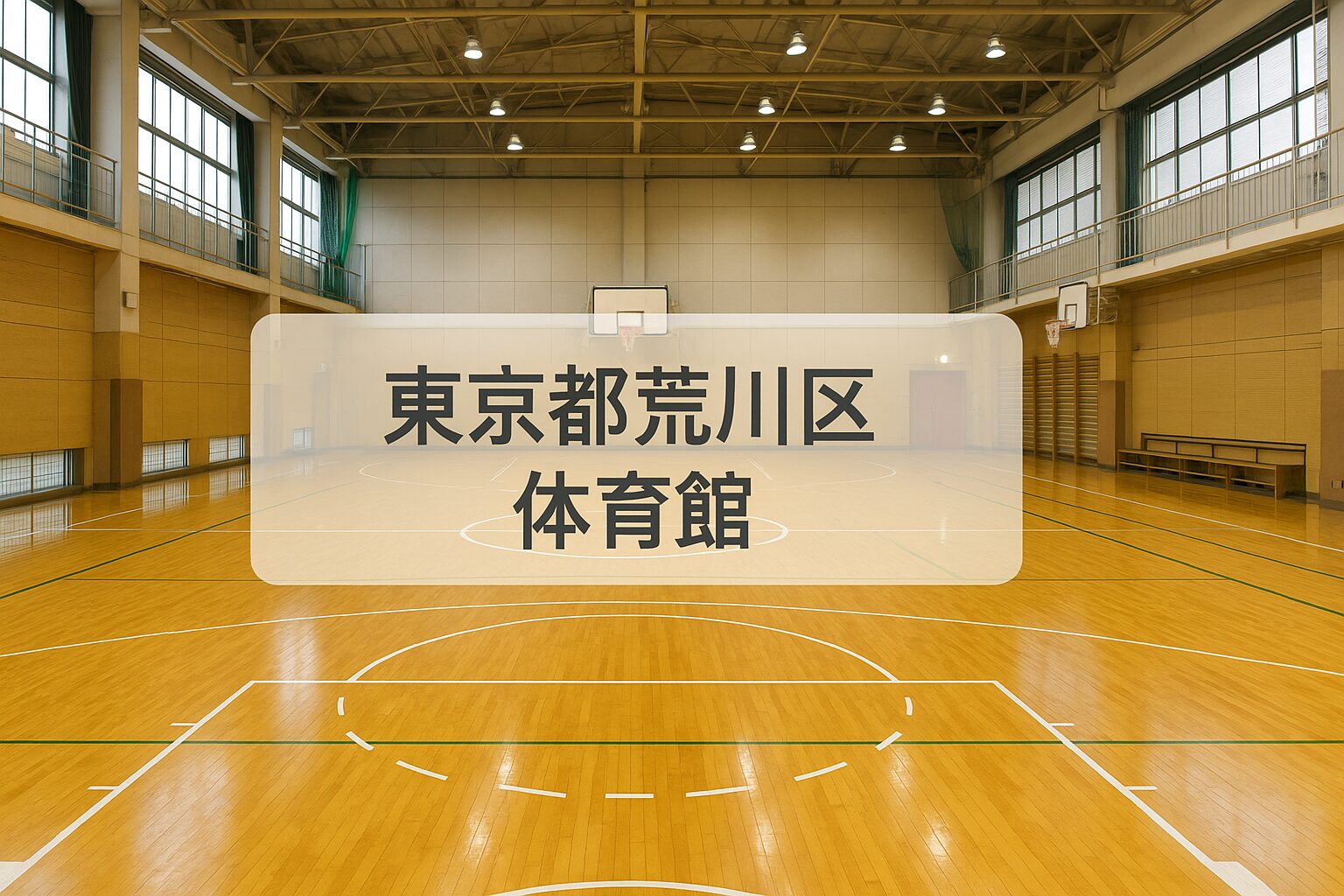
Arakawa Ward in Tokyo offers several public sports facilities run by the ward, where you can enjoy training gyms, swimming pools, and indoor sports at affordable prices. These facilities are open to everyone, including foreign residents staying mid- to long-term in Japan. By taking advantage of them, you can maintain a healthy lifestyle and have fun with recreation beyond just work. Here, we introduce five ward-operated sports facilities in Arakawa City that are especially convenient for foreigners to use.
1. Arakawa Sogo Sports Center (荒川総合スポーツセンター)
The Arakawa Sogo Sports Center is the flagship comprehensive sports facility of Arakawa Ward. It’s located at 6-45-5 Minami-Senju, Arakawa, Tokyocity.arakawa.tokyo.jp, roughly a 15-minute walk from JR Joban Line / Metro Hibiya Line Minami-Senju Station, or about 5 minutes on foot from the Tokyo Sakura Tram (Toden Arakawa Line) stops “Kuyakusho-mae” or “Arakawa 1-chome”. There is also a community bus “Sakura” that stops right in front of the center. For those coming by car, the facility has a parking lot with 55 spaces (300 yen per hour, maximum 1,000 yen per day). The center is open 8:00–22:30 (last entry 21:30) on most days, and is closed on January 1–3 for New Year holidays and, starting 2025, on the second Wednesday of each month for maintenance. You can check the official website (on Arakawa Ward’s site) for up-to-date notices and event information.
Facilities & Available Sports: The Arakawa Sogo Sports Center lives up to its “Sogo (Comprehensive)” name, boasting an extensive range of facilities. There’s a large heated indoor swimming pool (25 meters, 6 lanes), a Large Gymnasium and Small Gymnasium for sports like basketball, volleyball, and badminton (the large arena can accommodate a full basketball court, volleyball court, etc.), dedicated Table Tennis room, Training Room (gym), first and second Martial Arts halls (for judo, kendo, etc.), an Archery range, an Air Rifle range, a Studio for dance or aerobics, an indoor jogging track, a Kids’ room for children, as well as a multipurpose Hall and meeting rooms. In particular, the weight training room is spacious and filled with a variety of free weights, weight machines, and cardio equipment, catering to everyone from beginners to serious weightlifters. The center even features an air-rifle shooting range – a rather unique facility where you can practice target shootin. The swimming pool is Olympic-sized, making it great for lap swimming or just splashing around to exercise. Other sports you can enjoy here include badminton and table tennis (equipment like badminton nets and table tennis tables are available during open gym times). Note that children under 15 are not allowed in the training gym area for safety reasons, but they can use the pool or other areas under adult supervision.
Hours & Admission Fees: One major appeal of this public sports center is its affordable fees. There’s no monthly membership required – you pay per use. For example, the Training Room costs 500 yen for a 3-hour session, the gymnasium (体育室) costs 600 yen per 3 hours for adults, and the heated pool is 600 yen per 2 hours. Children (junior high age and below) enjoy significant discounts (e.g., 200 yen for the gym, 250 yen for the pool). These rates are extremely budget-friendly, especially compared to private gyms. There is generally no price difference for foreign users or non-residents – the fees are the same for anyone, regardless of nationality, as long as you’re using it individually. (Certain groups like Arakawa residents over 65 or people with disabilities can even apply for free usage, but standard adult users pay the small fee.) Tickets are purchased at automated vending machines at the entrance of each area or at the reception. For frequent users, coupon tickets (bulk ticket packs) are available, which can save you money over time. If you wish to use facilities as a group or book an entire court/room, you’ll need to register as a group and reserve in advance. Group rental fees are also inexpensive (e.g., 3 hours full court for 600 yen for ward resident groups), but priority is given to Arakawa local groups. Reservations for gymnasiums or martial arts halls are handled via a monthly lottery on the 1st of each month (except January 4th for New Year) by phone or fax. Once you get a slot, you pay the fee and use the space privately. However, if you’re just an individual user, no prior registration is needed – you can simply walk in during open-use hours.
How to Use (First Visit): Using the sports center is straightforward. On your first visit, you do not need any orientation session (unlike some other ward gyms) – it’s optional here. Just bring your workout clothes, indoor shoes, and a towel. At the entrance or lobby, find the ticket vending machine. Choose the facility you want (training room, pool, gym, etc.) and purchase the ticket (available in Japanese; if needed, ask a staff member to help the first time). For the pool, you’ll get a ticket which you hand to the pool reception and you’ll be given a locker key. For the training room or gym, buy a ticket and show it to the attendant at the entrance of that area. They will stamp it or take it, and then you’re free to enter. If it’s your first time and you look unsure, the staff can give you a simple tour or instructions on how to use the equipment – don’t hesitate to ask (some staff may speak a little English or use gestures). Locker rooms (changing rooms) are available for both gym and pool – they have 100 yen coin lockers (with the coin returned after use) for storing your clothes and valuables. After you finish your workout or swim, return any locker keys and you’re done. There’s no membership card or registration needed for regular individual use, making it very accessible for one-time or occasional users.
Foreigner-Friendly Features: Arakawa Sogo Sports Center is quite welcoming to foreign users. While the signage is mostly in Japanese, there are some pictograms and occasional English labels (for example, “No Smoking”, arrows to facilities, etc.). The reception desk may not always have fluent English speakers, but they are accustomed to helping visitors, so you can usually manage with basic English or even just indicating what you want. Because the facility is public and open to non-residents, foreign residents from any area can use it at the same low cost (some Tokyo public gyms charge extra for outsiders, but here prices are the same for everyone). The center’s affordability and comprehensive facilities have been noted by expats and international visitors – it’s listed in Time Out Tokyo’s best cheap workout spots in the city. This means you won’t feel out of place as a foreigner, and you might even meet other expat users. The atmosphere is casual and family-friendly, especially on weekends. There are often children, seniors, and adults of all ages exercising, which can make foreign newcomers feel more at ease. Keep in mind that most notices (like schedules or rules) will be in Japanese, so using a translation app or asking a staff member or Japanese friend to interpret key rules could be helpful initially. Overall, however, the lack of bureaucracy (no membership paperwork) and pay-as-you-go system make it one of the easiest places for a foreigner to start working out in Tokyo without a big commitment.
Etiquette & Tips: To ensure a smooth experience, there are a few Japanese gym etiquette points to note. Indoor shoes are required – you cannot wear your outdoor shoes into the training room or gymnasium areas. Bring a pair of clean sneakers exclusively for indoor use. If you forget, at least thoroughly wipe your soles or you may be denied entry. For the pool, a swimsuit and swim cap are mandatory (goggles are optional but recommended), so be sure to pack those. Swim caps can sometimes be purchased on-site if you don’t have one. Tattoos are a sensitive issue in Japan; at public pools like this, it’s best to cover any visible tattoos with rash guards or sleeves if possible to avoid trouble (small tattoos might be overlooked, but it’s safer to cover them). In the training gym, it’s customary to wipe down equipment after use (sanitizing spray and paper are provided). Also, sharing equipment is expected – avoid hogging a machine or bench during busy times; alternate sets with others if needed. Speaking loudly, shouting or making loud grunts is generally frowned upon – Japanese gyms are relatively quiet. Try to be mindful of the volume of your phone or conversations to not disturb others. Lastly, bring a 100 yen coin for lockers (it will be returned) and a towel not only for sweat but also because some facilities like the pool require you to dry off before leaving the area. By following these basic manners, you’ll blend in and enjoy your workout alongside local Japanese users comfortably.
2. Arakawa Yuen Sports House (あらかわ遊園スポーツハウス)
The Arakawa Yuen Sports House is a community sports center located in the Nishi-Ogu area of Arakawa Ward, right next to the Arakawa Amusement Park (Arakawa Yuen). Its address is 8-3-1 Nishi-Ogu, Arakawa, Tokyocity.arakawa.tokyo.jp. It’s very easy to access: just a 2-minute walk from the Arakawa-yūenchimae stop on the Tokyo Sakura Tram (Toden Arakawa Line). If traveling by train, from JR or other lines you can reach it via the tram from Otsuka or Minowabashi. The sports house shares the same location as the community park, making it a convenient recreation spot. The contact number is 03-3800-7333. Opening hours are 9:00–21:30 (last entry at 20:30). Closed days include the New Year holidays (Dec 29–Jan 3) and occasional maintenance days – always check the schedule. Important Note: As of now (2025), Arakawa Yuen Sports House is closed for major renovation from March 31, 2025 until around mid-2027. This means the facility is not available for use at the moment. It is undergoing a complete refurbishment and is expected to reopen with improved facilities. In the meantime, users are directed to other nearby facilities (like Arakawa Sogo Sports Center). We include it here because it has been a key sports facility in Arakawa and will be again after reopening.
Facilities & Sports: Arakawa Yuen Sports House is a bit smaller than the Sogo Sports Center, but it still offers all the essentials. It features an indoor arena (gymnasium) where you can play basketball, badminton, volleyball, table tennis, and other indoor sports. The arena is a single sports hall that can be divided or used fully (it has markings for various sports, although note that for basketball only simple portable hoops are available and there were no full court lines before renovation). There is also a 25-meter heated indoor swimming pool, suitable for lap swimming and swim classes year-round. For fitness enthusiasts, there’s a Training Room equipped with treadmills, stationary bikes, weight machines, and free weights. While not as large as the Sogo center’s gym, it covers most workout needs. Additionally, the facility had a meeting room and offered exercise classes (aerobics, yoga, etc.) in its arena space. Before renovation, it was a popular spot for local residents to take fitness classes or swimming lessons throughout the year. It’s expected that after renovation, the Sports House will continue to host such classes and possibly have upgraded equipment. Because it’s adjacent to the Arakawa Amusement Park, families often used the pool and sports house facilities in conjunction with park visits, giving it a relaxed, family-friendly vibe.
Fees & Usage: The Sports House’s pricing was similarly affordable. As a reference (pre-renovation rates), the pool was 500 yen for 2 hours, the training room 400 yen for 3 hours, and the arena (gym) 500 yen for a 3-hour individual session – slightly cheaper than the Sogo Sports Center. Children (up through junior high) were half price or less. These rates may be adjusted after reopening but likely remain low-cost. There were also discount exemptions for seniors 65+ and persons with disabilities (residing/working in Arakawa) similar to other ward facilities. Payment was made in cash via ticket machines at the reception. As for reservations, previously the Sports House accepted bookings for the arena by lottery each month (on the 1st of the month, via phone or fax) for groups wanting to use the court for clubs or events. Group rental fees for the arena were around 2,300–4,600 yen for half or full court per a few hours slot, making it quite cheap to rent out. However, during the renovation period, no reservations are being taken. Once it reopens, we expect a similar reservation system via the Arakawa Ward online facility reservation system or by contacting the Sports House directly.
How to Use: Prior to its temporary closure, using the Sports House was simple. No membership needed – you could drop in. For example, to use the pool or gym, you’d buy a ticket at the machine and hand it to the staff at the appropriate entrance. If it was your first time and you needed help, the staff (Japanese-speaking) were generally helpful in explaining the basics. First-time gym users did not require a mandatory orientation here either, so you could start using equipment right away. There were pamphlets (in Japanese) available detailing rules. Lockers were available for 100 yen (returnable) for storing your clothes while you swim or work out. During busy times, there might be a wait for popular machines or for entry into the pool (especially on weekends when they sometimes enforced time slots if crowded). The pool required wearing a swim cap, and a lifeguard would check this as you enter. If you joined a class (like aerobics or swim class), you would have registered at the desk (classes often ran in quarterly terms). For foreign users, the process was manageable as long as you could understand a bit of Japanese or use gestures. We anticipate that after renovation, the facility may incorporate more modern systems (possibly an electronic entry or multilingual signs). Keep an eye on Arakawa Ward’s website for announcements about the reopening and any changes in procedures.
Foreigner-Friendly Aspects: Arakawa Yuen Sports House served mainly the local community, which means the environment was very neighborhood-like and welcoming. You might not find a lot of English support on-site, but the smaller scale meant staff often recognized regular visitors and created a friendly atmosphere. Many foreign residents living in Arakawa, especially families, used this facility because it was less crowded than big city gyms and had swimming lessons for kids, etc. While instructions for equipment might have been in Japanese, staff could often demonstrate or use simple English words. One advantage is that the Sports House was active on social media (Twitter/X) to announce open-gym schedules and classes – albeit in Japanese, but using translation tools could help foreign users know when, say, badminton or basketball open sessions were available. The facility’s renovation offers hope that it will become even more foreigner-friendly, potentially with improved signage or even multilingual information kiosks. The location next to Arakawa Amusement Park also means you could make a day of it – for example, many international families would spend a morning doing sports or swimming at the Sports House, then enjoy the small amusement park or nearby Arakawa Riverbank in the afternoon. In summary, while currently closed, Arakawa Yuen Sports House has been and will likely continue to be a convenient and comfortable place for foreign residents, especially those seeking a community-oriented sports environment.
Etiquette & Points to Note: The etiquette here is similar to other Japanese sports centers. Remember to bring indoor athletic shoes – street shoes are strictly prohibited in the arena and training room, so you must switch to clean gym shoes upon entry (lockers for shoes were provided near the entrance). For the pool, swimwear and swim caps are required at all times. Also bring your own towel. Unlike some larger gyms, there was no shop inside, so you should bring any drinks or gear you need (there were vending machines for drinks). Keep your voice down and be respectful; since this is a small community facility, being overly loud can stand out. Also note some peculiarities: the volleyball court in the arena is an older 9-player format (though it can be used for standard 6-player volleyball), and if using the arena for basketball, there were no painted court lines, only simple port-able hoops. This didn’t hinder casual play but is good to know if you expect a full court experience. During busy periods, specific sports might be allocated certain hours (for example, they might designate times for badminton vs. basketball in open gym – these were posted on-site and on Twitter). It’s polite to follow these schedules. Finally, with the renovation, be prepared for possible new rules or systems upon reopening. Always double-check the latest guidelines from the official sources. By following staff instructions and local customs (indoor shoe rule, etc.), you’ll fit right in at the Sports House once it’s open again.
3. Arakawa Natural Park – Baseball Field & Tennis Courts (荒川自然公園 野球場・庭球場)
Arakawa Shizen Kōen (Arakawa Natural Park) is a large, green park in Arakawa Ward that also contains public sports facilities: namely, a baseball field and tennis courts. The park’s address is 8-25-3 Arakawa, Arakawa City, Tokyocity.arakawa.tokyo.jp. It’s conveniently located near two stops on the Toden Arakawa tram line: Arakawa-ni-chome and Arakawa-nana-chome, each just a minute or two on foot from the park entrances. The park itself is beautifully maintained with seasonal flowers, a pond (with swans and frogs according to local reviews), and even a small “Traffic Park” for kids to learn road safety. But for our sports focus, we’ll highlight the dedicated athletic facilities inside the park.
Facilities & Sports: Within Arakawa Natural Park, you’ll find an outdoor baseball field and a set of eight tennis courts. The baseball field is suitable for yakyū, specifically it’s used for youth baseball (少年野球) and adult rubber-ball (soft) baseball games. It’s a standard size for local league games, with backstop, dugouts, and dirt infield. The outfield is grass. The field can also double for soccer/football or other field sports if arranged, but primarily it’s for baseball. The tennis courts are a major draw: there are 8 courts labeled A through H. Courts A–D are sand-filled artificial turf (a kind of soft astroturf ideal for all-weather play) and have night lighting available. Courts E–H are hardcourt (likely asphalt or similar) without lights. This variety means you can choose your preferred surface (the artificial turf is easier on the legs, while hard courts give a different bounce). The presence of lighting on A–D means evening tennis is possible up to park closing time. Supporting facilities include a central management office (with restrooms, which also act as changing rooms and showers for players). Note that currently (early 2025), the management office restrooms were under renovation from Jan to April, but normally they provide toilets, sinks, and coin-operated showers for players. Also, near the tennis courts, there are vending machines for drinks. The park itself has walking paths and a jogging course, so even if you aren’t playing an organized sport, it’s common to see people jogging or doing morning exercises in the green space.
Hours & Booking: The sports facilities in Arakawa Natural Park are reservation-required and have specific hours. Generally, the facilities are open from the morning until early evening (no overnight use). For the tennis courts, typical hours are from 9:00 AM. Closing times vary by season: from April through September, courts can be used until 6:00 PM (on weekends/holidays, as early as 7:00 AM start). In October, until 5:00 PM; in November and December, until 4:00 PM (on holidays, earlier start at 8:00 AM). January and February also until around 4:00 PM, and March until 5:00 PM. Essentially, longer hours in summer, shorter in winter due to daylight. Courts A–D have floodlights, which allow play in the evenings (up to 9:00 PM in summer months) – indeed, the schedule notes that April–September (and up to November for some) can be until 9:00 PM for those courts. For the baseball field, hours similarly follow daylight: roughly 9:00 AM to sundown. In April it’s until ~5:45 PM, peak summer (May–August) on Sundays/holidays it can start at 7:00 AM, in Oct until ~3:00 PM or 5:00 PM on holidays, and shorter in winter (Nov–Feb ~4:00 PM). Check the posted schedules for exact times. The facilities are closed on the 1st and 3rd Thursday each month (if those fall on a holiday, the next day) and over New Year’s (Dec 29–Jan 3).
To use the tennis courts or baseball field, you must reserve in advance. This requires registering either as a team or individual with Arakawa’s system. The rule is: to use the baseball field, a team registration is required (and note: only rubber-ball baseball is allowed for adults; hardball is only allowed for elementary school use). For tennis, either a team or individual registration with the ward is needed. Registration is done in person at the Arakawa Sogo Sports Center and is only open to those who reside, work, or study in Arakawa Ward. (This means if you’re a foreign resident living in Arakawa, you qualify; if you live outside Arakawa, strictly speaking you can’t register on your own – you’d have to team up with someone who can.) Once registered, you can enter the lottery/booking system. The fees are very reasonable: the tennis courts cost 600 yen per hour (300 yen for junior high students or younger). Courts with night lighting cost an additional lighting fee of 1,400 yen per hour if used after dark. The baseball field costs 2,000 yen for 2 hours (800 yen if it’s a youth game). Payment is typically done after you win a reservation slot – either at the sports center or via bank transfer as directed.
Reservation process: Reservations are handled by an online system (Arakawa City Facilities Reservation System) or by the sports center. The general process is: you enter a lottery between the 1st and 6th of the month for slots in the following month. For example, if you want a court in June, you apply between May 1 and 6. When applying, you specify the date, time, and court/field (up to 10 choices can be submitted). The lottery is drawn on the 6th; you can check results on the system from the 7th. If you win, you must then pay the fee by the 13th of that month to confirm (either at the Sports Center or via the system’s payment options). After the lottery, any remaining open slots become first-come, first-served for reservations (via web or phone). This system might sound a bit complicated, but it’s standard in Tokyo wards. It ensures fair distribution since demand often exceeds supply. For foreign residents, the online system is in Japanese, so you might need to use translation tools or get help the first time. However, once you’ve navigated it, it’s fairly convenient to book.
Why it’s good for foreigners: If you’re a foreigner who enjoys tennis or baseball, Arakawa Natural Park offers a low-cost way to pursue these hobbies. Private tennis courts or batting cages in Tokyo can be pricey, but here you pay only a few hundred yen per hour. It is ideal if you have a partner or group – for instance, two people can play singles tennis for just 600 yen/hour total, which is a steal. The environment is also great: you’re playing surrounded by greenery in a public park rather than on a rooftop or cramped paid court. Many expatriates or overseas students living in Arakawa have joined local tennis circles or formed their own groups to utilize these courts. It’s also an opportunity to meet local Japanese players; sometimes, ward tennis courts have community doubles tournaments or practice sessions where anyone can join. For the baseball field, while individuals can’t just go and play catch freely (since it’s gated and by reservation), foreign residents who love baseball can consider joining a local 草野球 (weekday baseball) team. Arakawa Ward has some local amateur teams, often comprised of company workers or neighborhood groups. Joining a team could lead to playing at this field during weekend leagues. This is a fantastic way to integrate into local culture if you speak some Japanese or are eager to learn through sports. Also, note that the park allows casual jogging and exercise without any reservation – you’ll see folks doing tai chi or kids playing around. As a foreigner, you can freely enjoy the open areas of the park and perhaps strike up conversations – it’s a very community-centric area.
Etiquette & Tips: Because these are shared outdoor facilities in a residential area, be mindful of a few things. Time management is important: if you have a slot from 9-11 AM, you must finish and leave the court/field by the end time (including any setup or cleanup). Often, players will come a bit early and if the previous slot ended early, you might start a few minutes ahead, but officially stick to your times. For tennis, you might need to drag the court or use a broom to smooth the surface after play (especially on the artificial turf courts) – it’s good etiquette to leave the court in good condition for the next users. For the baseball field, only rubber baseballs (軟式球) are allowed for adult play (no hardballs). Also, only youth (likely elementary school teams) can use hardballs, so as an adult, make sure you use the correct type of ball. Smoking and alcohol are prohibited in the park and facilities, so save the celebratory beer for elsewhere. The park is no-smoking entirely. Noise: while playing, some noise is inevitable, but avoid loud foul language or yelling excessively, as the park is open and right next to residential buildings. If you have a late slot on a lit court, be especially courteous when leaving (keep voices down, no loud music, etc.). The facility has rules posted (in Japanese) that include many of these points. Also, since you’ll likely be carrying sports gear (rackets, etc.) on the tram or through the park, just be aware of your surroundings and don’t swing equipment carelessly where people are walking. Finally, always cancel your reservation if you’re not going to use it – this can usually be done online or with a call, and it’s courteous as it may allow someone on the waitlist to use the slot. By following these guidelines, you’ll enjoy a great time playing sports in a beautiful Japanese park setting.
4. Higashi-Ogu Sports Ground (東尾久運動場)
The Higashi-Ogu Undojo (Sports Ground) is another outdoor sports complex in Arakawa Ward. It is situated at 7-1-1 Higashi-Ogu, Arakawa, Tokyocity.arakawa.tokyo.jp, in the eastern part of the ward. The location is convenient: it’s near Kumano-mae Station on both the Nippori-Toneri Liner (a local transit line) and the Tokyo Sakura Tram (Toden Arakawa Line), just a couple minutes’ walk away. Several bus routes (like Toei Bus’s 【里48】from Nippori) also stop at Kumano-mae, making it accessible by multiple means. The sports ground can be found along Ogubashi-dori street; you might spot the tennis courts from the road. There’s a management office on site, which also houses toilets and presumably a small lounge. A parking lot is available with around 20 spaces; parking costs 300 yen per hour on weekdays (max 1,000 yen) and slightly different rates on weekends.
Facilities & Sports: Higashi-Ogu Sports Ground has three main facility areas: Tennis Courts, a Multi-Purpose Ground, and a Small Ground. The tennis courts consist of 5 artificial grass courts (all-weather type). These are often in high demand among local tennis players. The multi-purpose ground is a flat open field with dirt surface (or turf, not sure, but likely dirt) that can accommodate one soccer pitch or other sports like softball, etc. In fact, it’s commonly used for soccer matches (one junior soccer field). Local junior soccer clubs practice and hold matches here. The small ground (小広場) is particularly interesting: it includes a gateball / ground-golf area and a dedicated 3-on-3 basketball court (half-court). Gateball (a croquet-like sport for seniors) and ground golf (a casual mini-golf style game) are popular among elderly residents, and you’ll see them playing in the mornings. But for younger (and young-at-heart) sports enthusiasts, the half-size basketball court with one hoop is a highlight. This court is perfect for a pickup game of 3×3 basketball or just shooting around. It has a hard surface and a standard hoop with backboard. Because it’s outdoors, many local basketball lovers, including foreign residents, come here to play casually.
Usage & Booking: The usage system here partly mirrors that of Arakawa Natural Park. Tennis courts and the multi-purpose field require prior registration and reservation. Only registered teams (or individuals, for tennis) who are Arakawa residents/workers/students can book these facilities. The registration is done through the ward’s sports center similar to other facilities. Once registered, booking is via the same reservation system (lottery from 1st–6th of previous month, etc.). The fees are minimal: for instance, the multi-purpose field is 1,000 yen per 2 hours (400 yen for students), and each tennis court is 600 yen per hour (300 yen for students), exactly the same rate as Arakawa Natural Park courts. In fact, the ward standardizes these fees. Important difference: the Small Ground’s 3on3 basketball court does NOT require any reservation or registration. It’s free to use on a first-come, first-served basis. According to the official rules, to use the 3-on-3 basketball court, you just need to show up and request usage at the Higashi-Ogu management office on the same day. Essentially, it’s open play. The small ground is even listed as free of charge. This means anyone (not just Arakawa residents) can drop by and play pickup basketball as long as there’s space. This is great news for foreign residents who may not be able to navigate the reservation system for other sports – basketball here is very accessible.
Operating hours are similar to Arakawa Natural Park since both are outdoor: Typically, from 9:00 AM until around sunset. The schedule posted is: for the tennis courts and small ground: 9:00–6:00 (April–Sep, extended to 7:00 AM start on holidays) and shorter in winter (until 4:00 PM in Nov/Dec, etc.). The multi-purpose ground: 9:00–6:00 (Apr–Sep) and until 5:00 PM (Oct–Mar) with early starts on holidays year-round at 7:00 AM. The small ground (which includes the basketball half-court) is listed with the same hours as the tennis: e.g. April–Sep until 6:00 PM (7:00 AM on holidays), etc.. They note if a Heat Alert is issued, they may close the facility for safety. The facility is closed during New Year’s (Dec 29–Jan 3) and bad weather. Since it’s unlit (no mention of lights for the basketball or small ground), usage after dark isn’t possible except perhaps the tennis which mentions no lights specifically here (the Natural Park had lights, but Higashi-Ogu tennis might not, unclear, likely no lights).
Foreigner-Friendly Points: Higashi-Ogu Sports Ground’s 3-on-3 basketball court is a gem for foreigners. In Tokyo, finding free outdoor basketball courts is not easy. Many public parks don’t have hoops, and private courts can be expensive. Here you have a free, open court. This is especially attractive for foreign students or residents who grew up with street basketball culture. You can just pop in with a basketball and shoot around or invite friends for a half-court game. You might also meet local Japanese players or other foreigners (word tends to get around the expat community about such courts). It’s a fantastic way to socialize and engage in sport without the need for formal arrangements. For other sports, if you’re keen on tennis or soccer, you’d need to go through the registration process – which is doable if you reside in Arakawa. If you can manage that, you get the same benefit as the Natural Park: super cheap tennis and a place for your soccer team to practice. There might be local futsal groups using the soccer field too (though the field is likely dirt, it might host futsal or training). Keep in mind communication for booking is in Japanese; however, once you have a slot, sports break language barriers. On weekends, the place is lively with kids’ soccer and elderly ground-golf players in the morning, then perhaps more youth using tennis and basketball midday. As a foreigner, you won’t feel out of place – the environment is casual. If anything, some locals might be curious to talk to you especially if you join in a pick-up basketball game. Being part of such local activities can greatly enrich your experience living in Japan.
Etiquette & Advice: When using Higashi-Ogu Sports Ground, follow similar etiquette as the Natural Park. For tennis and soccer fields: stick to your reserved time and be sure to have your registration card or proof when you arrive, as the staff may ask (especially if it’s a first time). If the grounds are wet from rain, the ward might close them for safety – they usually post notices, so check the Arakawa website or call if weather is questionable (they also specifically say usage stops if a Heat Alert is in effect for extreme heat). For the 3×3 basketball court: while it’s drop-in, you should still check in at the office before using it. Typically, they keep track to ensure it doesn’t get too crowded. If other people are waiting to play, it’s good etiquette to play games (say up to a certain score) and then rotate teams or let newcomers play. Sharing is caring, as the court is community property. Also, as it’s near residential buildings, don’t play late (they won’t allow play past closing times anyway) and avoid loud music or yelling profanity. The ground is free, so treat it respectfully: don’t litter (there should be trash bins in the park, but if not, take your trash home). In general, Arakawa’s policy for such free spaces is that they cannot be monopolized by one group for too long if others are waiting, so be mindful of that. Another tip: bring your own equipment. There’s no rental for tennis rackets or basketballs, etc., at these outdoor grounds. And bring water – playing outside in summer can be very hot and vending machines might be a bit of a walk (I believe there are vending machines near the management office though). By following the basic rules and being courteous, you’ll have a great time engaging in sports at this facility.
5. Arakawa Ward Citizens Athletic Ground (区民運動場)
The Kumin Undōjō, or Ward Citizens’ Sports Ground, is a public athletic field primarily used for community sports like youth soccer and tennis practice. It’s located at 3-14-3 Nishi-Ogu, Arakawa City, Tokyocity.arakawa.tokyo.jp, adjacent to Oku-Hachiman Junior High School. Access is via the Tokyo Sakura Tram Miyanomae stop or Odai stop (both about 5 minutes walk). It’s also not far from JR Oku Station. Essentially, this facility is a shared use of a school’s athletic field, opened to the public on weekends and holidays when school is out. If you visit on a weekday, you likely won’t be able to use it (since the school’s using it). But on weekends, it becomes a hub for local sports.
Facilities & Sports: The Kumin Sports Ground consists of a Multi-purpose field and a small tennis court area. The multi-purpose ground is an artificial turf field (recently the ward laid down artificial grass here) that is about the size of a junior soccer field. It’s primarily used for 少年サッカー (youth soccer) – one junior soccer pitch is marked. Local kids’ soccer leagues and clubs often have matches or training here. It can also host softball or other ground sports if scheduled. There is also a small tennis practice court (the facility listing says “small ground with sand-filled artificial turf tennis 1 court”). This is basically one tennis court on sand-filled artificial grass. It’s likely enclosed by fencing, and since it’s only one court, availability is limited. The site being next to a junior high school means there might be minimal amenities – possibly no dedicated building except maybe a storage shed or small office used on weekends. But typically, visitors can use the school’s restrooms or temporary facilities when it’s open to the public.
Usage & Booking: Because this is essentially a school field, it’s only available Saturdays, Sundays, and public holidays from 9:00 to 17:00 (5 PM). In the summer (May to September), if requested, they allow an extra hour (so until 6 PM) for the last slot. It is closed on weekdays (since school is in session) and of course year-end/New Year (Dec 29–Jan 3). To use it, you must reserve just like other fields. The reservation process is identical: register a team or individual (if tennis) with Arakawa ward (must be ward resident/worker/student), then enter the lottery or book if available. Reservation priorities here might often go to local youth sports organizations (e.g., junior high or clubs) since it’s a limited facility. Fees: For the multi-purpose ground (the soccer field), it’s 3,000 yen for 2 hours (1,200 yen if it’s strictly for junior high age or younger). For the small tennis court, it’s 1,200 yen for 2 hours (300 yen for juniors). These are slightly higher durations/prices because they probably assign by 2-hour blocks. If you extend by 1 hour, additional fees are 1,500 yen (600 yen for kids) for the big field and 600 yen (300 for kids) for the tennis court. Essentially, an adult soccer group pays 1,500 yen per hour which is still dirt cheap compared to private fields. Payment is done via the Sports Center or online similarly to other facilities – if you get a slot by lottery (1st–6th previous month), you pay by the 13th at the Sports Center or through bank. On the day, a caretaker (likely only present weekends) helps open the facilities. In fact, the facility detail notes the on-site phone is only active on Sat/Sun/holidays and that number is 03-3892-5856 for those times.
Why it’s useful for foreigners: This facility is a bit more specialized – it’s mostly beneficial if you have kids involved in local sports or if you personally are into tennis and want a quiet practice court on a weekend. If you’re a foreign parent living in Arakawa, enrolling your child in a local soccer team or club could give them (and you) a community. Matches or practice at Kumin Undojo are common for elementary school teams. It’s a great way for kids to integrate, and sports is a universal language! For adult foreign residents, playing soccer here casually isn’t straightforward (you can’t just show up to play; you’d need to be part of a group that reserves the field). However, if you work in Arakawa and have colleagues who play, you might form a small team and book this ground for a friendly match or training. The artificial turf is a nice feature – many school grounds in Tokyo are just dirt, but this being turf means better playability and no dust. For tennis enthusiasts, the single court here can be a hidden gem if you manage to reserve it. It might be easier to get than the more numerous courts at Natural Park or Higashi-Ogu because people often forget about the sole court here. And since they allow individual registration for tennis, you and a friend (who both live/work in Arakawa) could snag it for a weekend hit for just 1,200 yen (split two ways, 600 each for 2 hours, amazingly cheap). The environment is usually quiet; you’re next to a junior high school and residential blocks, so it’s very local feeling.
Etiquette & Warnings: Since this facility is on school property, treat it with extra respect. No alcohol or smoking on the premises (standard for school grounds). Also, they may have rules like no spikes/cleats on certain areas (if it’s artificial turf, use turf shoes or molded cleats appropriate for that surface to avoid damage). If you’re using the soccer field and it’s adjacent to school buildings, be careful not to kick balls into windows or off-limits areas – usually nets or fences surround the field to prevent that. Time is strictly limited to weekends; do not attempt to use the grounds on a weekday – you’d likely be trespassing on a school. When you finish using the field or court, clean up: pick up any trash, and if it’s the soccer field, you might need to do things like return movable goal posts to where they were, etc. For tennis, since it’s sand-filled artificial grass, they might have a drag mat to even out the sand – if so, do a quick drag after play as courtesy. Also, because it’s a smaller, neighborhood facility, be mindful of noise and language. Local residents or even school staff might be around. Cheering and enjoyment is fine, but avoid continuous loud shouting or any offensive language that neighbors could overhear. If spectators (like parents for kids’ matches) are present, they should also behave politely (Japanese sports events expect cheering but not heckling or overly loud yelling). Changing facilities might be limited – possibly just a simple restroom. So come dressed for action if you can, or be prepared to change modestly (perhaps in a toilet stall or a simple changing room if provided). Lastly, note that because it’s adjacent to a junior high, on some weekends there might be school events (sports day, etc.) that make the ground unavailable beyond the posted schedule; the ward usually informs via the booking system of such closures, often labeled as “school event – facility closed”. If errors occur in booking or you can’t find the location, contact the Sports Center – they’ll guide you, but on site on weekends the person in charge might not speak English, so having a Japanese speaker if problems arise is helpful. In summary, treat the Ward Citizens Sports Ground like you’re a guest at a school’s field – follow the rules, respect the property, and enjoy the chance to play sports in a very community-centric setting.
By utilizing these five public sports facilities in Arakawa Ward, foreign residents can maintain an active, healthy lifestyle and connect with the local community. Whether you prefer hitting the gym, swimming laps, shooting hoops, playing tennis, or joining a soccer game, Arakawa’s ward-run centers and grounds offer options for all – at a fraction of the cost of private clubs. Beyond just staying fit, visiting these places can be a cultural experience: you’ll encounter local Tokyo life, maybe pick up some Japanese sports terms, and even make friends across language barriers. Remember that each facility has its own procedures and etiquette, but don’t let language fears stop you. Staff and fellow users generally welcome anyone with a love of sports. So step out of the work hustle, and dive into the recreational side of life in Japan. From an early morning swim at the Sogo Sports Center to a casual Sunday tennis match in the park, Arakawa Ward’s sports facilities can greatly enrich your daily routine. Embrace a balanced lifestyle – work hard, play hard, and stay healthy. Enjoy your sports adventures in Arakawa!