 By How to Live in JAPAN 編集部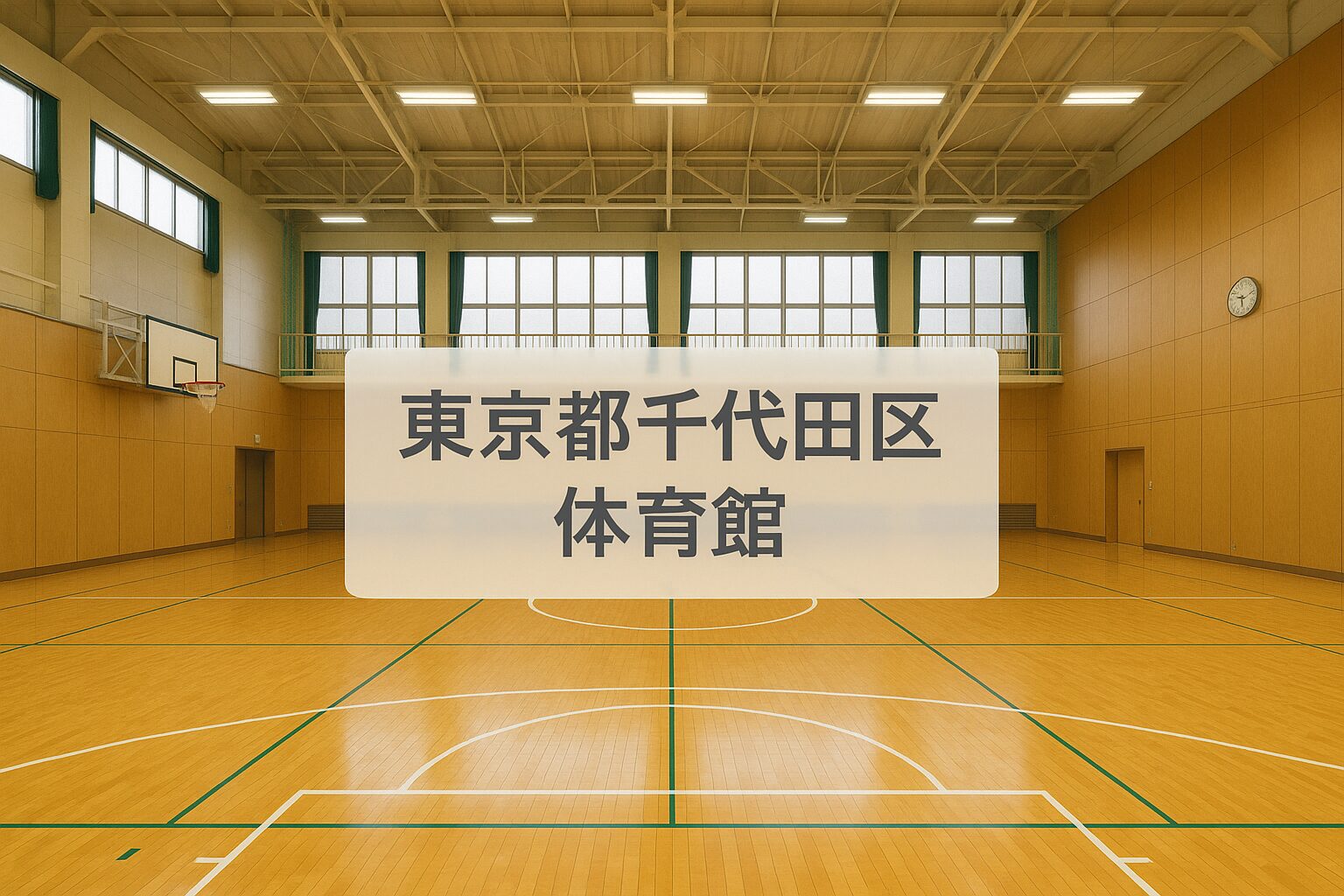
Chiyoda Ward in Tokyo operates several public sports centers that are available for use by ward residents, workers, students, and even visitors, all at very affordable prices. If you are a foreigner living in Japan for a few months or years, making use of these local gymnasiums and pools can greatly enrich your life beyond just work or study. In this article, we introduce five ward-run sports facilities in Chiyoda Ward that are foreigner-friendly, along with details like location, access, opening hours, fees, how to use them, reservation methods, and important etiquette and tips for use.
1. Chiyoda Sports Center (千代田区立スポーツセンター)
The Chiyoda Sports Center is a comprehensive public sports facility located in Uchikanda, in the heart of Tokyo’s Chiyoda Ward. This large center offers a wide range of activities under one roof, from weight training in the gym and swimming in a heated pool to indoor sports like basketball, badminton, and table tennis. The facility is conveniently located about a 5-minute walk from JR Kanda Station (West Exit) or Tokyo Metro Otemachi Station (Exit A2), making it easily accessible in the city center.
Facilities and sports: The center is well-equipped with a 25-meter indoor swimming pool (6 lanes), a fully outfitted training gym (with cardio machines and weight training equipment), a large main arena that can accommodate multiple sports (e.g. 2 basketball courts or volleyball courts, up to 8 badminton courts), a table tennis area, and dedicated martial arts halls for judo and kendo. It even features an archery range (also used for kyudo, Japanese archery) and a sumo ring, as well as a small outdoor golf practice range. With its extensive facilities, people of all ages—from children to seniors—use the sports center for a variety of activities.
Hours and holidays: The center is open daily from 9:00 to 21:00 (last entry around 20:50, and building closes by 21:30). It is closed on the third Monday of each month (if that Monday is a public holiday, it closes the following weekday instead) and during New Year holidays (December 29 to January 3). Always check the latest schedule on the official website or notices, as there may be occasional maintenance closures or changes.
Fees: The usage fees are very budget-friendly compared to private gyms in Tokyo. For example, the weight training room costs just ¥500 per adult per visit (and even cheaper at ¥300 if you are a Chiyoda Ward resident) with no time limit within that day. The heated pool is ¥600 per adult for up to 2 hours (¥400 for ward residents), and ¥300 for children (¥200 for ward resident children). If you exceed 2 hours in the pool, an additional ¥300 per hour is charged. Other sports in the arena (during public open-gym times) cost around ¥350 per adult per session (usually one morning, afternoon, or evening block), or about ¥200 if you have the resident discount. There are even discount ticket booklets (multiple-use passes) available which make frequent visits even more economical. In addition, certain groups can use the facilities for free (for example, ward residents who are seniors over 60, registered disabled persons, and preschool children can use some facilities at no charge).
How to use (individual visits): You do not need a reservation to use the facilities individually. Simply show up at the center and purchase a ticket for the desired facility at the automated vending machines in the lobby on the first floor. The machine has an English menu option, making it easy even if you don’t read Japanese. After buying a ticket, you will present it to staff or insert it at the gate to enter. If you are a Chiyoda Ward resident, you can obtain a “Ward User Card” (区民利用カード) by showing proof of your address at the front desk (this card lets you pay the discounted resident rates at the machines). Even if you are not a resident, you can use the facilities by paying the standard fee. Inside, there are locker rooms with showers and coin lockers for your belongings. Coin lockers typically require a ¥10 coin (some require two ¥10 coins, one of which is returned when you retrieve your items). It’s wise to bring a few coins with you. Store your items in a locker and follow all posted rules and staff instructions while using the facilities.
Reservations for courts (group use): If you want to use areas like the gymnasium court or martial arts rooms for a private group (e.g. to play basketball with a team or hold a group practice), you must register in advance as a group and make a reservation through the ward’s online facility reservation system. Reservations for groups are subject to lottery or first-come scheduling a couple of months in advance, with priority given to ward residents or workers. However, for normal individual use of the pool, gym, or open gymnasium sessions, no reservation is needed—just check the timetable for public use hours and drop in during those times. (Do note that if the facility is extremely crowded, they may limit entry or enforce time limits, but this is rare outside of peak times.)
Foreigner-friendly points: While the staff primarily speak Japanese, the center provides an English guidance pamphlet and the ticket machines and some signs are bilingual. Many foreigners in Tokyo use this facility, so the staff are accustomed to assisting non-Japanese users (basic English is usually understood at the reception). The rules and procedures are straightforward. As long as you follow the basic guidelines (like changing into indoor shoes and wearing a swim cap in the pool), you should have no trouble enjoying the facilities here. The official website (operated by Mizuno, the company managing the center) is in Japanese, but you can use translation tools or ask staff if you have questions.
Official website: https://shisetsu.mizuno.jp/m-7501
2. Shohei Domukan (昌平童夢館)
Shohei Domukan is a community sports facility located in the Akihabara area (Sotokanda) of Chiyoda Ward. It is part of a complex that includes an elementary school (Shohei Elementary School) and a small public library, with the school’s facilities being made available to the public during off-hours. The building is about a 5-minute walk from Suehirocho Station (Tokyo Metro Ginza Line) or a 7-minute walk from JR Akihabara Station’s Electric Town exit, making it convenient if you live or work around Akihabara.
Facilities and sports: The Shohei Domukan facility includes a 25m indoor heated pool (with 4 lanes) on the 5th floor and a gymnasium on the 5th floor that can be used for sports like basketball (about one court size) or badminton (roughly two courts). On the 6th floor, there is a rooftop schoolyard covered by a retractable dome roof, which can be used for futsal, tennis practice, or other outdoor sports regardless of weather. While smaller in scale than the main Chiyoda Sports Center, Shohei Domukan offers a good selection of activities in a more intimate, local atmosphere.
Hours and holidays: Because it shares space with an active elementary school, the public can only use the facility during certain hours. On weekdays (Mon–Fri), the pool and gym are open to the public only in the evening from 18:00 to 21:00 (6pm–9pm) after school is over. On weekends and school holidays, it is open from 10:00 to 21:00. The facility is closed on the second Sunday of each month (its designated monthly maintenance day), as well as during the New Year holidays (Dec 29–Jan 3) and occasional special closures for cleaning or events. Keep in mind that you cannot use it on weekday daytime hours due to school activities.
Fees: The fees at Shohei Domukan are the same as those at the Chiyoda Sports Center. The pool costs ¥600 per adult for 2 hours (¥400 if you have the ward resident card), and the gymnasium can be used during open hours for around ¥350 per adult (per session) or about ¥200 for ward residents. High school students and younger are half price. These low fees make it very accessible for regular use.
How to use: Similar to the Sports Center, you buy an entrance ticket at the lobby vending machine when you arrive (or show your resident card to get the discount). Then proceed to the floor you intend to use. If you’re using the pool, remember to bring and wear a swim cap; it’s mandatory in all Japanese public pools. For the gymnasium, you must change into indoor athletic shoes before stepping onto the court. Also bring any equipment you need (for example, basketballs, shuttlecocks, ping-pong paddles and balls) because the facility does not provide gear rentals. After your activity, you can change and shower in the locker room. Note that the facilities here are part of a school, so they may feel a bit more basic compared to the larger Sports Center, but they are clean and functional. Be mindful that schoolchildren and local families also use this facility, so follow the rules and maintain a respectful atmosphere.
Reservations: For individual swimming or joining an open gym session, no reservation is required—just come during the public hours. If you have a group and want to use the rooftop field or gym exclusively, you will need to reserve in advance through the ward’s system or at the office (similar to other facilities). Monthly schedules for the pool and gym open hours are published (in Japanese) on Chiyoda Ward’s website under community school pool schedules, so you can check which days and times the pool is available to the public each month.
Foreigner-friendly points: Foreign residents and even some tourists use Shohei Domukan, so the staff are used to non-Japanese users. The front desk may not speak much English, but the process is straightforward. You can simply say keywords like “pool” or “gym” when you enter, buy a ticket, and the staff will guide you if needed. The atmosphere is very local and friendly, which can be a great opportunity to mingle with the community. Don’t be surprised if curious schoolkids or local residents strike up a friendly conversation (in Japanese) — it’s part of the charm of using community facilities!
Official website: https://www.city.chiyoda.lg.jp/shisetsu/bunka/shoheidomu.html
3. Kanda Sakura-kan (神田さくら館)
Kanda Sakura-kan is another ward-run community sports facility, located in the Kanda area (Tsukasamachi, Chiyoda Ward). It’s housed in a multi-purpose building that includes a school (Chiyoda Elementary School), a childcare facility, and a small library, similar to Shohei Domukan, with public access provided when the school is not in session. The location is about a 5-minute walk from several stations: JR Kanda Station, Tokyo Metro Awajicho Station, or Toei Ogawamachi Station, making it convenient for office workers in the Kanda and Otemachi area to visit after work.
Facilities and sports: Kanda Sakura-kan has a basement heated pool (25m, roughly 4 lanes, with a small jacuzzi space and a shallow kids’ area) and a multi-purpose sports hall on the ground floor that serves as a gymnasium. The hall can be used for sports like basketball (half-court), badminton, volleyball, table tennis, dance, or yoga. In addition, on the 2nd floor there is an outdoor schoolyard (playground) that can be used for tennis or futsal when available (daytime and early evening only, as it has no lights beyond 8:30pm). The facility isn’t large, but it is sufficient for local residents to enjoy common sports and even to hold community sports classes. There are also meeting rooms, Japanese-style rooms, and other community spaces in the building, but sports-wise the pool and gym are the main attractions.
Hours and holidays: On weekdays, Kanda Sakura-kan is open 18:00–22:00 (6pm–10pm) to the public (with the outdoor schoolyard available until 20:30). On weekends and school holidays, it opens from 9:00 to 22:00 (schoolyard until 20:30). The facility is closed on the third Sunday of each month, as well as during New Year’s holidays (Dec 29–Jan 3) and any special maintenance days. As with other community-based centers, you cannot use it during school hours on weekdays.
Fees: The fees are the same standard rates as the other ward facilities. The pool is ¥600 per adult for 2 hours (¥400 for ward residents) and ¥300 for children (¥200 for resident children). The gymnasium open-use sessions are around ¥350 per adult (¥200 for residents) per session. Additionally, ward residents who are seniors (60+) or who have disabilities can use the facilities for free. These reasonable prices attract a mix of local students after school, families, and office workers in the evenings.
How to use: Enter through the first-floor reception, purchase a ticket from the machine, and head to the facility you want to use. As always, wear a swim cap in the pool and indoor shoes in the gym. There are no gear rentals, so bring any sports equipment you might need (for example, if you plan to play badminton or table tennis, bring your rackets and shuttlecocks or balls). The locker rooms and showers are available; however, because this is a converted school facility, the number of lockers might be limited, so use them efficiently and be prepared to keep valuables with you or use small lockers if provided. Since the building also hosts a library and community center, be mindful of noise (no running or shouting in the halls). Basic courtesy goes a long way in these shared spaces.
Reservations: You do not need a reservation for individual use during open hours. For group use (e.g., reserving the hall or schoolyard for a club or event), you must register and apply via the ward’s reservation system or at the venue, similar to other facilities. Schedules for public swim times or gym availability are posted on the ward’s website and on bulletin boards at the facility. If you’re unsure about anything, the staff at reception can answer questions (in Japanese) or you might ask a Japanese-speaking friend to help check the schedule online.
Foreigner-friendly points: This facility has a very local feel, but foreigners are absolutely welcome. The staff will generally communicate in Japanese, but if you state what you want (“pool” or “taiku-kan” for gymnasium), they will accommodate you. As it’s a smaller community hub, regular users will likely be the same local people each week. If you follow the rules and are friendly, you’ll find yourself accepted as part of the community. It could even lead to invitations to join local sports clubs or events. Take the opportunity to experience a slice of local Tokyo life while staying active!
Official website: https://www.city.chiyoda.lg.jp/shisetsu/bunka/kandasakura.html
4. Chiyoda Parkside Plaza (ちよだパークサイドプラザ)
Chiyoda Parkside Plaza is a community complex in Kanda Izumi-cho, about a 7-minute walk from JR Akihabara Station (and the Tsukuba Express Akihabara Station) or a 10-minute walk from Iwamotocho Station (Toei Shinjuku Line). It shares a building with Izumi Elementary School and a nursery school. When school is not in session, certain facilities are open to the public. This facility is one of the few that are open during daytime on weekdays, so it’s a great option if you have free time in the morning or afternoon (for example, for stay-at-home parents, remote workers, or students with flexible schedules).
Facilities and sports: The Plaza features a 25m indoor heated pool (4 lanes, depth ~0.9m–1.2m) and a gymnasium (a modest multi-purpose hall on the 6th floor with a sports flooring, suitable for one volleyball or badminton court or a few table tennis tables). The pool is on the B1 floor of the building and has a shallow depth, which is friendly for less confident swimmers and children. There is no special diving area or water slide, but it’s good for lap swimming and water exercise. The gymnasium is not large but can accommodate sports like badminton, table tennis, or casual basketball (likely half-court) for practice or pick-up games. Because it’s essentially a school gym, the space is well maintained but limited in size compared to a dedicated sports center. The facility is very clean and modern, having been renovated along with the school.
Hours and holidays: The building is generally open from 9:00 to 22:00 on weekdays and Saturdays, and until 17:00 on Sundays and public holidays. However, note that the public access times for the pool are roughly 10:00 to 21:00 (until 17:00 on Sundays/holidays). It may not be open for public swimming early in the morning on weekdays if the school uses it for classes. The gymnasium likewise is open to the public when school is not using it (typically afternoons, evenings, and weekends). The Plaza is closed every third Sunday of the month, and also from December 29 to January 3 for the New Year break. It’s a good idea to check the ward’s website or posted schedules for exact pool open hours and any school events that might block out the gym.
Fees: Chiyoda Parkside Plaza follows the same fee structure as other ward sports facilities. Adults pay ¥600 for 2 hours of pool use (¥400 for ward residents) and around ¥350 for a gymnasium session (¥200 for residents). Children pay roughly half that (¥300 for pool, or ¥200 if ward resident). Ward residents who are senior citizens or have disabilities can use the facilities for free. There is also a ward library room in this building that can be used free of charge (though unrelated to sports).
How to use: Enter through the ground-floor entrance and check in at the reception. Buy your ticket from the machine for either the pool or gym. Then proceed to the locker rooms or gym as appropriate. For the pool, change into your swimsuit and mandatory swim cap, and shower before entering the water. The pool operates similarly to the Sports Center pool, often with a system of one-hour swim periods followed by a short mandatory 10-minute rest break each hour for safety. Keep an eye on the clock or announcements for these break times when everyone must exit the pool briefly. For the gymnasium, change into your indoor athletic shoes. As usual, you should bring your own equipment (balls, rackets, etc.) because the facility does not provide them. There are coin lockers available—some might require a refundable ¥100 coin—so bring a few coins just in case. Eating and drinking are not allowed except in designated lounge areas, and smoking is prohibited. Since this facility is connected to a school, help keep it clean and safe for everyone by following the rules (for example, no alcohol, no roughhousing, etc.).
Reservations: No reservation is needed for individual use during the public open hours (first-come, first-served). If a session (like a badminton free play slot) is popular, you might have to rotate with others or wait your turn, as managed by the staff. For group use of the gymnasium (like reserving it for a club or event), you’ll need to go through the usual group registration and booking via the ward’s reservation system. Ward residents have priority booking periods, and remaining slots are later opened to others. For most foreign users just looking to swim or casually play sports, simply dropping in during open hours is the way to go.
Foreigner-friendly points: Parkside Plaza is located near Akihabara, an area familiar to many visitors and expats, so it’s relatively easy for foreigners to find and use. The facility has instructional signs with illustrations, making it easy to understand the rules even if your Japanese is limited. The atmosphere is relaxed, often with local families and seniors using the pool or hall. There is no special procedure for foreigners—everyone is welcome equally. Just follow the example of local users. If in doubt, watch what others are doing (such as wearing indoor shoes or cleaning up after themselves) or politely ask the staff; even if they reply in Japanese, they will do their best to assist you.
Official website: https://www.city.chiyoda.lg.jp/shisetsu/bunka/parkside.html
5. Iki-iki Plaza Ichibancho (いきいきプラザ一番町)
Iki-iki Plaza Ichibancho is a unique public facility located in the quiet, upscale Ichibancho area of Chiyoda Ward (near the Imperial Palace). It is primarily a welfare and community center for senior citizens, but notably it has a public heated swimming pool on the 8th floor that anyone can use. The location is about a 5-minute walk from Hanzomon Station or Kojimachi Station (Tokyo Metro), and around 13 minutes from JR/Metro Ichigaya Station. If you are looking for a place to swim in a calm environment, this is an excellent option.
Facilities and sports: The main sports facility here is an indoor heated pool that is a bit smaller than standard: 18m long x 7m wide, 4 lanes, with a water depth of 0.85m to 1.0m. It’s ideal for casual swimming, water walking, or aquatherapy, but not for competition training. There is also a jacuzzi spa (bubble bath) next to the pool, which many older patrons enjoy for relaxation. The pool area is equipped with accessible features like a wheelchair lift and accessible changing rooms, reflecting its focus on elder and rehab use. In addition to the pool, the Plaza has a “health corner” with devices like body fat scales and blood pressure monitors free to use, as part of its health promotion mission.
Hours and holidays: The pool is generally open from 10:00 until 20:00, with usage divided into fixed time slots. Currently, they operate a 2-hour session system with a complete turnover after each session. For example, sessions might be 10:00–12:00, 12:00–14:00, 14:00–16:00, 16:00–18:00, and 18:00–20:00 (five sessions per day). Users can only stay for one session at a time. You cannot reserve these slots in advance; instead, they are first-come, first-served. A numbered ticket or entry pass is given out at the pool reception starting 15 minutes before each session. If you arrive at, say, 9:45 for the 10:00 session, you can get in line to receive an entry ticket when they start distribution. If a session is full (there’s a maximum of about 40 swimmers per session), you may need to wait for the next session. The pool is closed on every last Sunday of the month and also around New Year’s (Dec 31–Jan 3). (Note: During peak summer holidays, schedules or rules may be adjusted due to crowding, so check the official information for any special arrangements.)
Fees: The fee is ¥600 per adult for one 2-hour session (¥400 if you are a ward resident with a user card), and ¥300 for children (¥200 for ward resident children). Ward residents who are seniors (60 and over), those with disabilities, and preschool children aged 4-6 can use the pool for free (children under 4 are not allowed for safety reasons). Payment is made at the time of entry (there’s a ticket machine or reception staff collecting fees). There are no multi-use passes or memberships; it’s pay per visit.
How to use: Since you cannot pre-book, you need to come slightly before the start of a session you want to join. Go to the 8th floor of the Iki-iki Plaza (you can take the elevator) and find the pool reception. There, at about 15 minutes before the session, they will hand out entry tickets or allow you to purchase your ticket. Once you have your ticket, you’ll pay if you haven’t already, then enter the locker room to change. Lockers are available free of charge (the staff will give you a key, or you may need to insert a coin which is returned later). Shower before entering the pool. As with all pools in Japan, you must wear a swim cap. Typically, you will have 1 hour and 50 minutes of swim time, and then a 10-minute break when everyone must exit the pool at the end of the session. Please follow the lifeguards’ and instructors’ directions — they may blow a whistle or make an announcement when it’s break time. Note that providing paid swimming lessons or personal training to someone in the pool is not allowed (to prevent crowding and for fairness). The atmosphere at this pool is usually calm and the pace is leisurely, making it great for those who want gentle exercise or rehab.
Reservations: As mentioned, there are no reservations — it’s strictly first-come, first-served for each session. If you want to ensure a spot, especially for popular times like weekends or early evening sessions, arrive early. The official website provides a monthly pool calendar (with an English version available) so you can see which days and times the pool is open or closed.
Foreigner-friendly points: This facility is geared toward health and welfare, so it’s quiet and not crowded with serious athletes. Foreign residents can use it without any special procedures, just like any local. The staff may not speak much English, but there are some English notices or translations available for basic rules. They even provide an English version of the pool schedule online. If you enjoy a relaxed environment and don’t mind the session system, you will find this pool welcoming. It’s particularly suitable if you prefer a slower pace or want to mingle with local older residents in a respectful setting.
Official website: https://www.ichibancho-camellia-kai.com/ (See the “温水プール” page for pool information)
General Etiquette and Tips for Using Public Sports Facilities
Lastly, here are some important etiquette points and tips to keep in mind when using Chiyoda Ward’s public sports facilities (and Japanese public gyms and pools in general):
- Bring indoor shoes and a swim cap: For any indoor court or gym, outdoor street shoes are not allowed on the playing surfaces. Bring a pair of clean athletic shoes that you use only indoors. Change into these at the facility (there are shoe lockers or areas to switch shoes). Likewise, if you will use a pool, you are required to wear a swimming cap to keep hair out of the water. Don’t forget to pack these items in your bag before you go.
- Bring your own sports equipment: There is usually no gear rental available for things like balls, rackets, or goggles. If you plan to play basketball, table tennis, badminton, etc., bring the necessary equipment with you (for example, a basketball or ping-pong paddles and balls). Some regular users may lend you something if you forget, but it’s best to be prepared.
- Locker room use: All facilities have locker rooms with either free or coin-operated lockers. Keep your valuables on your person or use a small valuables locker if provided. For coin lockers, you will typically need a 100-yen coin (often refunded when you return the key) or small coins for certain types. It’s wise to have a few coins handy just in case.
- Prohibited items/activities: All facilities are non-smoking. Eating and drinking are allowed only in designated lounge areas (no food or drink in the gym, pool deck, or locker rooms). Also, entering while intoxicated or consuming alcohol on the premises is forbidden. Essentially, treat it like a fitness club: stay sober and focus on exercise.
- Photography and video: To protect everyone’s privacy, refrain from taking photos or videos inside the facility unless you have explicit permission. This is especially important in swimming areas and locker rooms—cameras and phones should be away.
- Follow staff instructions: Japanese public sports centers may have some rules or customs that you are not used to (like mandatory rest periods in pools, using clips on weight bars, or resetting machines after use). The staff or instructors might give gentle corrections or guidance. It’s important to follow their instructions, as these rules are in place for safety and to keep the environment comfortable for all. Even if a request seems odd to you, try to comply patiently and politely.
- Cultural considerations: These public facilities are community spaces, so you might be exercising alongside children, students, or elderly patrons. It’s part of the experience of community sports in Japan. Be friendly and greet others when appropriate, take care not to monopolize equipment, and clean up after yourself (e.g. wipe down machines, return any borrowed items to their place). If you have tattoos, be aware that while most gyms and pools in Tokyo are becoming more accepting, some older individuals might be uncomfortable. Consider covering large tattoos with sports sleeves or swimwear, just to avoid any misunderstandings.
By following these guidelines and showing respect to staff and fellow users, you will fit right in and can fully enjoy the excellent public sports facilities that Chiyoda Ward offers. Staying active and connecting with the local community through recreation can greatly enhance your life in Japan. So grab your workout gear or swimsuit, and feel free to explore these gyms and pools. They are affordable, well-maintained, and open to everyone. Enjoy your active lifestyle in Tokyo!